Das große internationale Interesse an Christopher Nolans Film „The Odyssey“ könnte sich für den griechischen Tourismus als wertvoller Impuls erweisen. Doch eine Marketingidee sorgt bereits für deutlichen Widerstand: Die Gemeinde Ithaka hat den Vorschlag zurückgewiesen, die Ionischen Inseln zu Werbezwecken gemeinsam als „Odysseus-Inseln“ zu vermarkten. Geschichte und Identität der legendären Heimat des homerischen Helden dürften nicht zu einer allgemeinen Tourismusmarke für eine ganze Region werden, lautet die klare Botschaft von der Insel.
Den Vorschlag brachte Savvas Koulouris, stellvertretender Regionalgouverneur für Finanzen und Handel, bei einer Sitzung des Regionalrats am Samstag, dem 22. August, ein, wie Greekreporter berichtet.
Die Initiative ist Teil der Vorbereitungen für den Auftritt der Ionischen Inseln auf dem World Travel Market (WTM), einer der bedeutendsten internationalen Fachveranstaltungen der Tourismusbranche, die im November in London stattfindet.
Auf Ithaka, jener Insel, die seit Jahrtausenden untrennbar mit Homers Odysseus verbunden ist, stieß der Plan allerdings auf eine unmissverständliche Reaktion.
„Ithaka ist Ithaka. Odysseus hat seine Heimat, und sie kann nicht in eine allgemeine Tourismusmarke der Ionischen Inseln verwandelt werden“, erklärte die Gemeinde Ithaka.
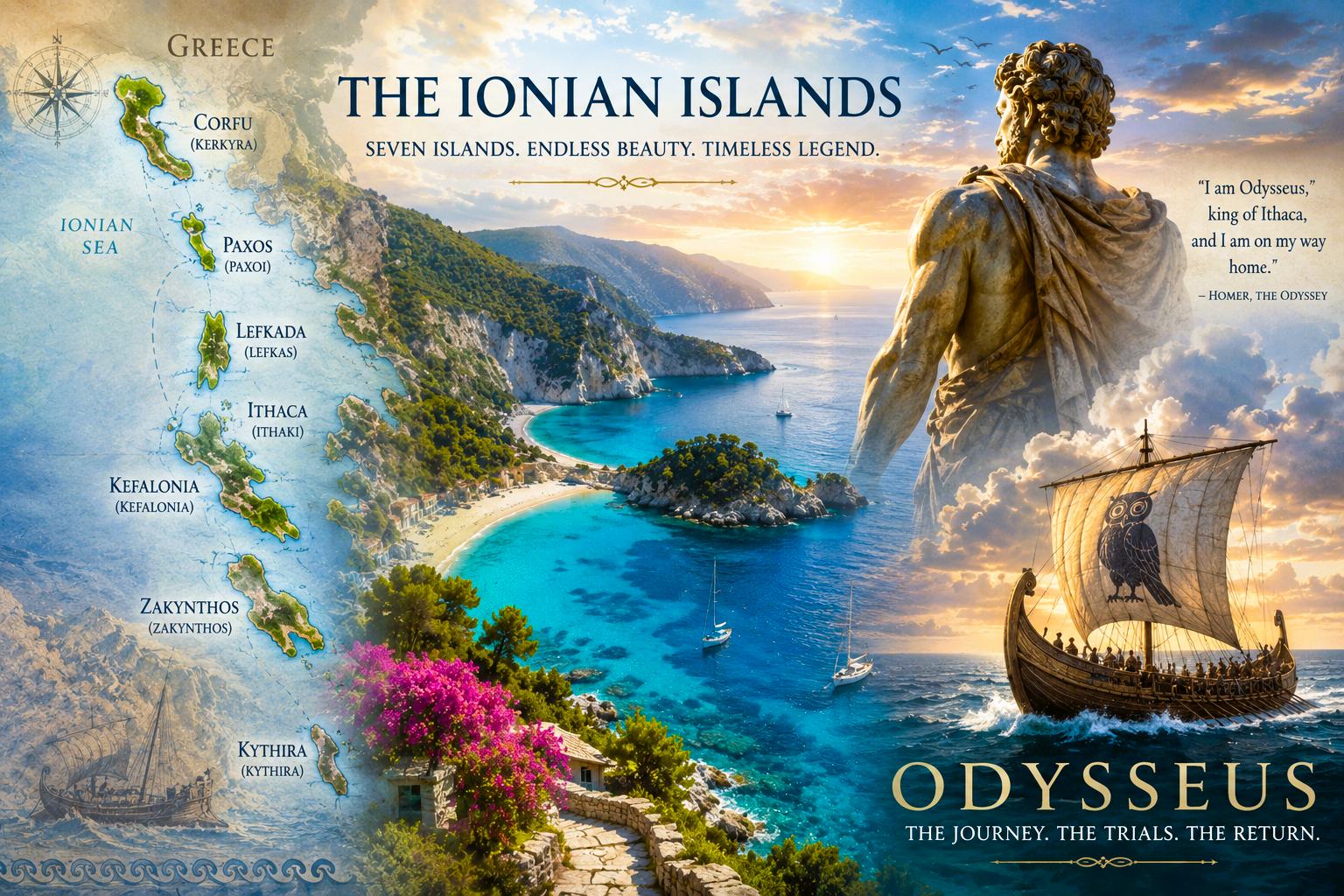
Von Korfu bis Zakynthos: Die sieben großen Ionischen Inseln
Die Ionischen Inseln (Ionian Islands) liegen im Ionischen Meer vor der Westküste Griechenlands. Traditionell sind sie auch unter der Bezeichnung Eptanisa bekannt – wörtlich „Sieben Inseln“.
Zu dieser Inselgruppe gehören Corfu (Korfu), Paxos, Lefkada, Ithaca (Ithaka), Kefalonia, Zakynthos und Kythira, wobei Kythira geografisch deutlich weiter südlich als der Kern des Ionischen Archipels liegt. Zum Archipel zählen darüber hinaus zahlreiche kleinere Inseln und Eilande.
Jede der sieben Hauptinseln verfügt über ein ausgeprägtes historisches, kulturelles und touristisches Profil – ein Umstand, der in der aktuellen Debatte um eine gemeinsame Dachmarke eine entscheidende Rolle spielt.
Nolans „The Odyssey“ als Chance für den Tourismus
Auslöser der neuen Marketingidee ist die enorme Aufmerksamkeit, die Christopher Nolans „The Odyssey“ auf sich zieht. Der Film des US-amerikanischen Regisseurs basiert auf Homers weltberühmtem Epos und rückt damit auch jene Landschaften und Mythen ins internationale Blickfeld, die seit der Antike mit Odysseus verbunden werden.
Die Tourismusverantwortlichen der Ionischen Inseln sehen in diesem weltweiten Interesse offenbar die Chance, die gesamte Region stärker auf dem internationalen Reisemarkt zu positionieren.
Savvas Koulouris erklärte auf der jüngsten Sitzung des Regionalrats, der Gouverneur der Ionischen Inseln, Yannis Trepeklis, ehemaliger Bürgermeister von Korfu, bereite für den Auftritt der Region auf dem World Travel Market 2026 eine Art „Überraschung“ vor.
Diese „Überraschung“ soll darin bestehen, die Ionischen Inseln unter einem gemeinsamen und international leicht vermittelbaren Namen zu präsentieren: als „Odysseus-Inseln“.
„Da der Film des amerikanischen Regisseurs Christopher Nolan, ‚The Odyssey‘, derzeit im Mittelpunkt der Aufmerksamkeit steht, wird es auf dem WTM eine besondere Veranstaltung geben, bei der die Ionischen Inseln als ‚Odysseus-Inseln‘ präsentiert werden. Ziel ist es, daraus eine starke Marke zu machen, denn obwohl jede Insel natürlich ihre eigenen Besonderheiten hat, wollen wir derzeit eine Marke schaffen, die alle Ionischen Inseln umfasst“, betonte Koulouris.
Aus Ithaka kommt ein entschiedenes Nein
Was von den Regionalbehörden als wirkungsvoller Marketingansatz gedacht ist, wird auf Ithaka als eine Frage verstanden, die unmittelbar die Geschichte und Identität der Insel berührt.
Die Gemeinde machte deutlich, dass sie eine internationale touristische Vermarktung der Ionischen Inseln grundsätzlich unterstützt. Die Verwendung des Namens Odysseus als gemeinsame Dachmarke für sämtliche Inseln der Region lehnt sie jedoch ab.
„Obwohl wir die Öffnung zur Welt und die touristische Förderung der Ionischen Inseln unterstützen, kann die Gemeinde Ithaka den Vorschlag, die Ionischen Inseln ‚Odysseus-Inseln‘ zu nennen, nicht akzeptieren“, heißt es in der Erklärung.
Aus Sicht der Gemeinde geht es dabei um weit mehr als eine Frage des Marketings. Odysseus ist über Literatur, Geschichte und Überlieferung seit Jahrhunderten unmittelbar mit Ithaka verbunden – und damit Bestandteil einer Identität, die die Insel als ihr eigenes kulturelles Erbe versteht.
„Andere können nicht ohne Ithaka entscheiden“
Ithaka gilt weltweit als Heimat des Odysseus, des Helden aus Homers „Odyssee“. Seine Heimkehr nach dem Trojanischen Krieg und die jahrelange Irrfahrt auf dem Weg zurück zu seiner Insel gehören zu den bekanntesten Erzählungen der europäischen Literatur- und Kulturgeschichte.
Für die örtlichen Behörden folgt daraus, dass über die touristische Nutzung des Namens Odysseus nicht entschieden werden könne, ohne Ithaka selbst einzubeziehen.
„Wenn es um eine so ernste Frage geht, die die Geschichte, die Identität und die internationale Marke Ithakas betrifft, können andere nicht ohne Ithaka entscheiden“, heißt es weiter.
Die Gemeinde forderte den Regionalrat der Ionischen Inseln deshalb auf, „Ithaka, seine Geschichte und seine einzigartige Beziehung zu Odysseus zu respektieren“.
Ein Name, sieben Inseln – und die Frage nach der Identität
Auf den ersten Blick folgt die Idee der „Odysseus-Inseln“ einer nachvollziehbaren touristischen Logik: Die weltweite Aufmerksamkeit rund um Nolans Film soll genutzt werden, um eine international verständliche und leicht wiedererkennbare Marke für die Region zu schaffen.
Doch genau an diesem Punkt beginnt der Konflikt.
Die Ionischen Inseln bilden einen Archipel mit unterschiedlichen historischen Erfahrungen, kulturellen Traditionen und touristischen Profilen. Ithaka wiederum betrachtet seine Verbindung zu Odysseus als einzigartig und untrennbar mit dem eigenen Namen und seiner jahrtausendealten Überlieferung verbunden.
Die Gemeinde wendet sich daher nicht gegen eine gemeinsame internationale Vermarktung der Region. Ihr Widerstand richtet sich vielmehr gegen den Versuch, Odysseus zu einer touristischen Dachmarke für sämtliche Ionischen Inseln zu machen.
Nach Auffassung der Verantwortlichen auf Ithaka verfügt die Region über genügend andere Qualitäten, auf denen eine gemeinsame touristische Strategie aufbauen kann: die außergewöhnliche Landschaft, das Ionische Meer, Geschichte und Architektur, lokale Küche und Traditionen sowie die individuellen Besonderheiten jeder einzelnen Insel.
„Ithaka gibt seine Geschichte und seinen Namen nicht preis“
In ihrer abschließenden Stellungnahme lässt die Gemeinde wenig Raum für Interpretationen.
Eine stärkere touristische Präsenz der gesamten Region auf internationaler Ebene sei durchaus wünschenswert. Sie dürfe jedoch nicht auf Kosten einer historischen Identität erfolgen, die Ithaka seit Jahrhunderten weltweit unverwechselbar macht.
„Die touristische Förderung der Ionischen Inseln kann und sollte auf ihren vielen unterschiedlichen Vorzügen beruhen. Ithaka gibt seine Geschichte und seinen Namen nicht preis“, heißt es abschließend in der Erklärung.
English:
RIDING THE WAVE OF “THE ODYSSEY”: Ithaca Rejects Proposal to Rebrand the Ionian Islands as the “Islands of Odysseus”
The intense international interest surrounding Christopher Nolan’s “The Odyssey” could prove a valuable asset for Greek tourism. Yet one attempt to harness that attention has already met with firm resistance. The Municipality of Ithaca has rejected a proposal to promote the Ionian Islands collectively as the “Islands of Odysseus,” arguing that the history and identity of the legendary homeland of Homer’s hero cannot simply be transformed into a tourism brand for an entire region.
The proposal was put forward by Savvas Koulouris, Deputy Regional Governor for Finance and Trade, during a meeting of the Regional Council on Saturday, August 22, according to Greekreporter.
The initiative forms part of preparations for the Ionian Islands’ appearance at the World Travel Market (WTM), one of the international tourism industry’s leading events, which will take place in London in November.
On Ithaca, however — an island whose name has been inseparable from Homer’s Odysseus for millennia — the proposal was met with an unequivocal response.
“Ithaca is Ithaca. Odysseus has his homeland, and it cannot be turned into a general tourism brand for the Ionian Islands,” the Municipality of Ithaca stated.
From Corfu to Zakynthos: The Seven Great Ionian Islands
The Ionian Islands lie in the Ionian Sea, off the western coast of Greece. Traditionally, they are also known as the Eptanisa, literally meaning the “Seven Islands.”
The group comprises Corfu, Paxos, Lefkada, Ithaca, Kefalonia, Zakynthos and Kythira, although Kythira lies considerably farther south than the main body of the Ionian archipelago. Numerous smaller islands and islets also form part of the wider island group.
Each of the seven principal islands possesses a distinct historical, cultural and touristic identity — a distinction that lies at the heart of the current debate over whether they should be placed beneath a single cultural and promotional umbrella.
Nolan’s “The Odyssey” as a Tourism Opportunity
The immediate catalyst for the new branding proposal is the extraordinary attention surrounding Christopher Nolan’s “The Odyssey.” Based on Homer’s timeless epic, the film has brought renewed international attention not only to the story of Odysseus but also to the landscapes, myths and places associated with his journey since antiquity.
Tourism officials in the Ionian Islands appear to see this global fascination as an opportunity to strengthen the region’s profile on the international travel market.
At the latest meeting of the Regional Council, Savvas Koulouris said that the Governor of the Ionian Islands, Yannis Trepeklis, a former mayor of Corfu, was preparing a kind of “surprise” for the region’s presentation at the World Travel Market 2026.
That “surprise” would be the presentation of the Ionian Islands under a single, internationally recognisable name: the “Islands of Odysseus.”
“Since the film ‘The Odyssey’ by American director Christopher Nolan is currently in the spotlight, a special event will be held at WTM where the Ionian Islands will be presented as the ‘Islands of Odysseus.’ The aim is to establish a strong brand because, although each island naturally has its own distinctive character, at this moment we want a brand that encompasses all the Ionian Islands,” Koulouris said.
An Unequivocal No from Ithaca
What regional officials envisioned as an effective exercise in destination branding has been interpreted on Ithaca as something considerably more consequential: a question that touches directly upon the island’s history and identity.
The Municipality of Ithaca has made clear that it supports the international promotion of the Ionian Islands as a whole. What it rejects is the use of Odysseus as a common umbrella brand for every island in the region.
“Although we support openness to the world and the tourism promotion of the Ionian Islands, the Municipality of Ithaca cannot accept the proposal to call the Ionian Islands the ‘Islands of Odysseus,’” the statement reads.
From the municipality’s perspective, this is about far more than marketing. Through literature, history and cultural memory, Odysseus has been intimately associated with Ithaca for centuries. That association, the island argues, is not merely a useful promotional motif but part of its own cultural inheritance.
“Others Cannot Decide Without Ithaca”
Ithaca is known throughout the world as the homeland of Odysseus, the hero of Homer’s “Odyssey.” His return after the Trojan War — and the long years of wandering and trials that precede his arrival home — form one of the foundational narratives of European literary and cultural history.
For the local authorities, it follows that decisions concerning the use of Odysseus’ name as a tourism brand cannot be taken without Ithaca itself having a voice.
“When it comes to such a serious matter, concerning the history, identity and international brand of Ithaca, others cannot decide without Ithaca,” the statement continues.
The municipality therefore called on the Regional Council of the Ionian Islands “to respect Ithaca, its history and its unique relationship with Odysseus.”
One Name, Seven Islands — and a Question of Identity
At first glance, the idea of the “Islands of Odysseus” follows an understandable logic. The unprecedented international attention surrounding Nolan’s film offers tourism authorities a rare opportunity to create a memorable and readily recognisable identity for the region.
Yet this is precisely where tourism strategy encounters the more complex terrain of cultural heritage.
The Ionian Islands form an archipelago shaped by different histories, traditions and cultural identities. Each has developed its own character and international image. Ithaca, meanwhile, regards its relationship with Odysseus as singular — inseparable from both the island’s name and a cultural tradition stretching back thousands of years.
The municipality is therefore not objecting to the joint international promotion of the Ionian Islands. Its objection is to the attempt to turn Odysseus into an overarching marketing symbol for the entire archipelago.
In Ithaca’s view, the Ionian Islands possess more than enough qualities on which to build a shared tourism strategy: their remarkable landscapes and the luminous waters of the Ionian Sea, their history and architecture, local cuisine and traditions, and the distinctive character of each individual island.
The dispute therefore raises a broader question that extends beyond tourism: where does the promotion of cultural heritage end, and the appropriation of a particular place’s identity begin?
“Ithaca Will Not Give Away Its History or Its Name”
In its concluding remarks, the Municipality of Ithaca left little room for ambiguity.
A stronger international presence for the Ionian Islands is both welcome and desirable, it maintains. But such promotion should not come at the expense of a historical identity that has made Ithaca recognisable throughout the world for centuries — and whose roots reach back to one of the defining works of Western literature.
“The tourism promotion of the Ionian Islands can and should be based on their many and varied strengths. Ithaca will not give away its history or its name,” the municipality concluded.
Text: Svetlana Nenadovic Glusac / Quelle: Greekreporter
Foto: D&C Austria/AI