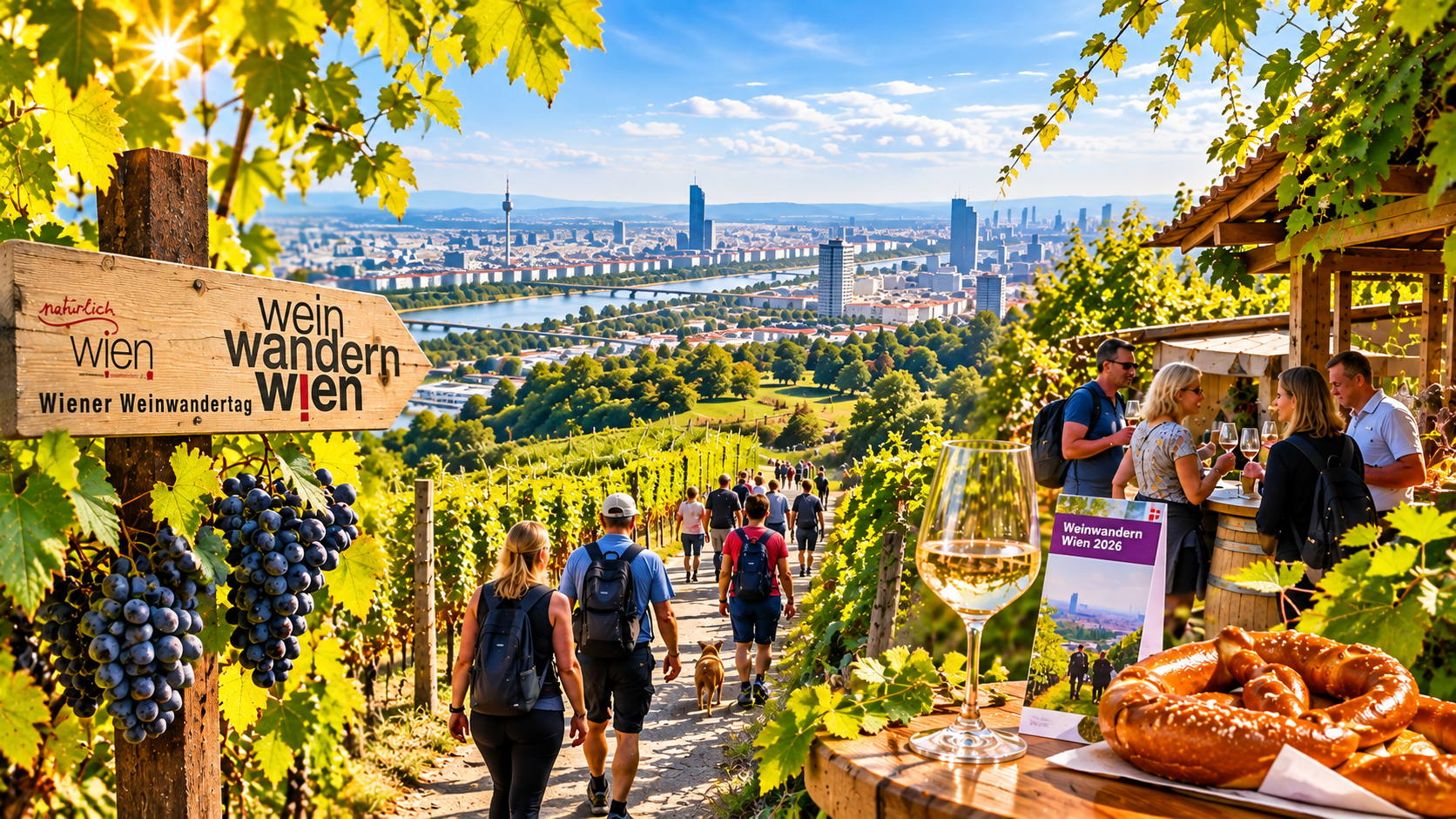
The vineyards overlooking Vienna once again became one of the Austrian capital’s most beautiful stages last weekend. The traditional Wiener Weinwandertag brought together wine lovers, nature enthusiasts and walkers, who on 26 and 27 September had the opportunity to discover the city from an entirely different perspective – among rows of vines, wine cellars and Vienna’s famous Heuriger wine taverns.
Vienna is renowned for imperial landmarks such as Schönbrunn Palace and the Hofburg, the world-famous Vienna State Opera (Wiener Staatsoper) and the magnificent architecture of the former Habsburg capital.
Yet there is another side to the city that many visitors discover only when they venture beyond the historic centre: Vienna is also a city of vineyards.
And not merely a few symbolic plots on the outskirts.
According to the City of Vienna, vineyards cover around 600 hectares, while approximately 170 wine-growing businesses operate within the city.
This unusual relationship between a major European metropolis and a centuries-old wine-growing tradition comes into its own every autumn during the Wiener Weinwandertag – Vienna Wine Hiking Day.
This year’s event took place over the weekend of 26 and 27 September, from 10 am to 6 pm, with access to all hiking routes free of charge.
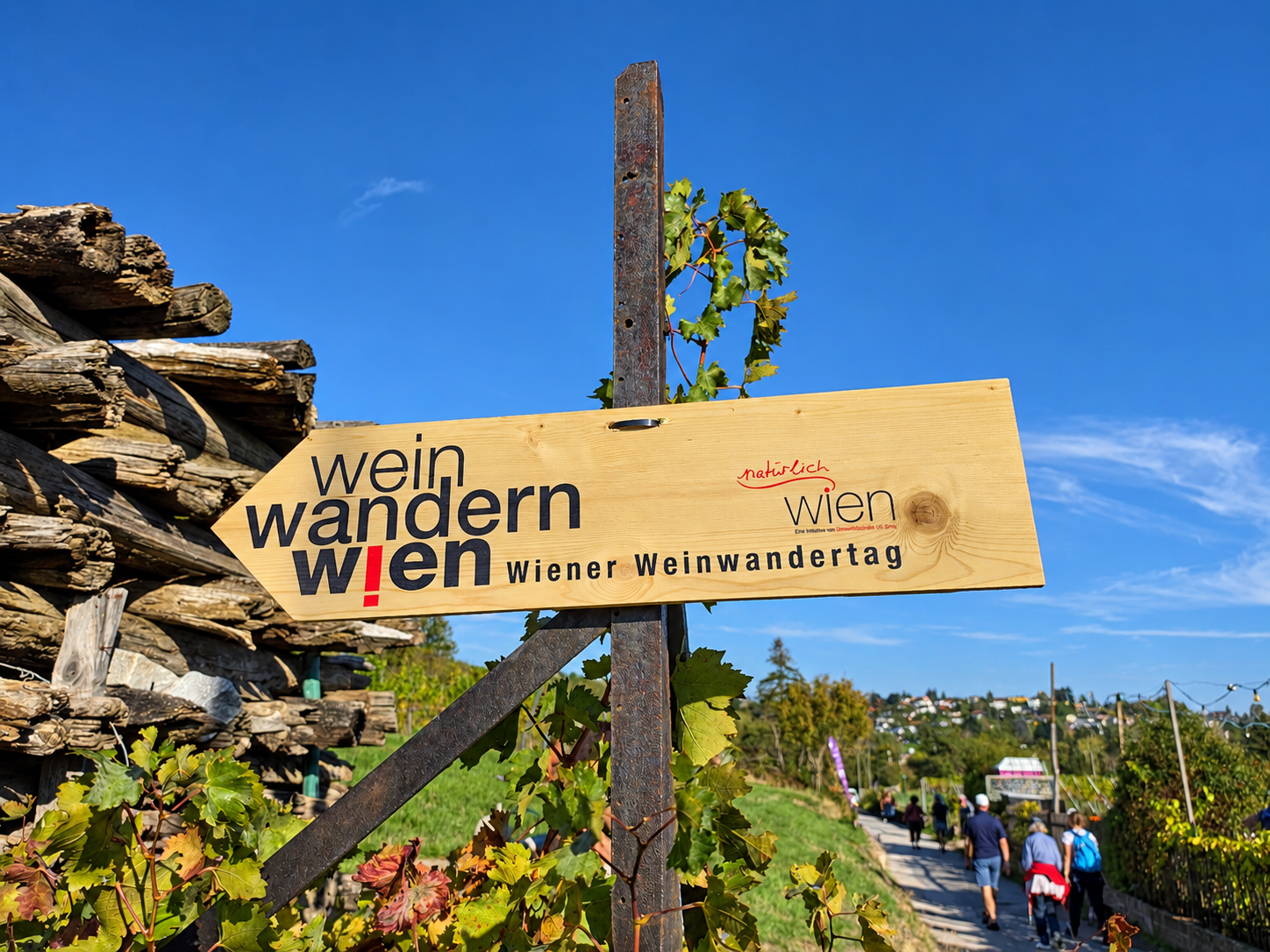
Four Routes Through Vienna’s Vineyards
Visitors could choose between four routes across different parts of the city.
The longest stretched from Neustift to Nussdorf in Vienna’s 19th district, covering approximately 10.8 kilometres. Another major route, around 9.6 kilometres long, connected Strebersdorf and Stammersdorf in the 21st district.
Shorter alternatives were available for those who did not want to spend the entire day hiking.
A circular route through Ottakring, in the 16th district, covered around 2.4 kilometres, while the trail through Mauer, in Vienna’s southern 23rd district, extended for approximately 4.6 kilometres.
There was, however, no need to complete an entire route.
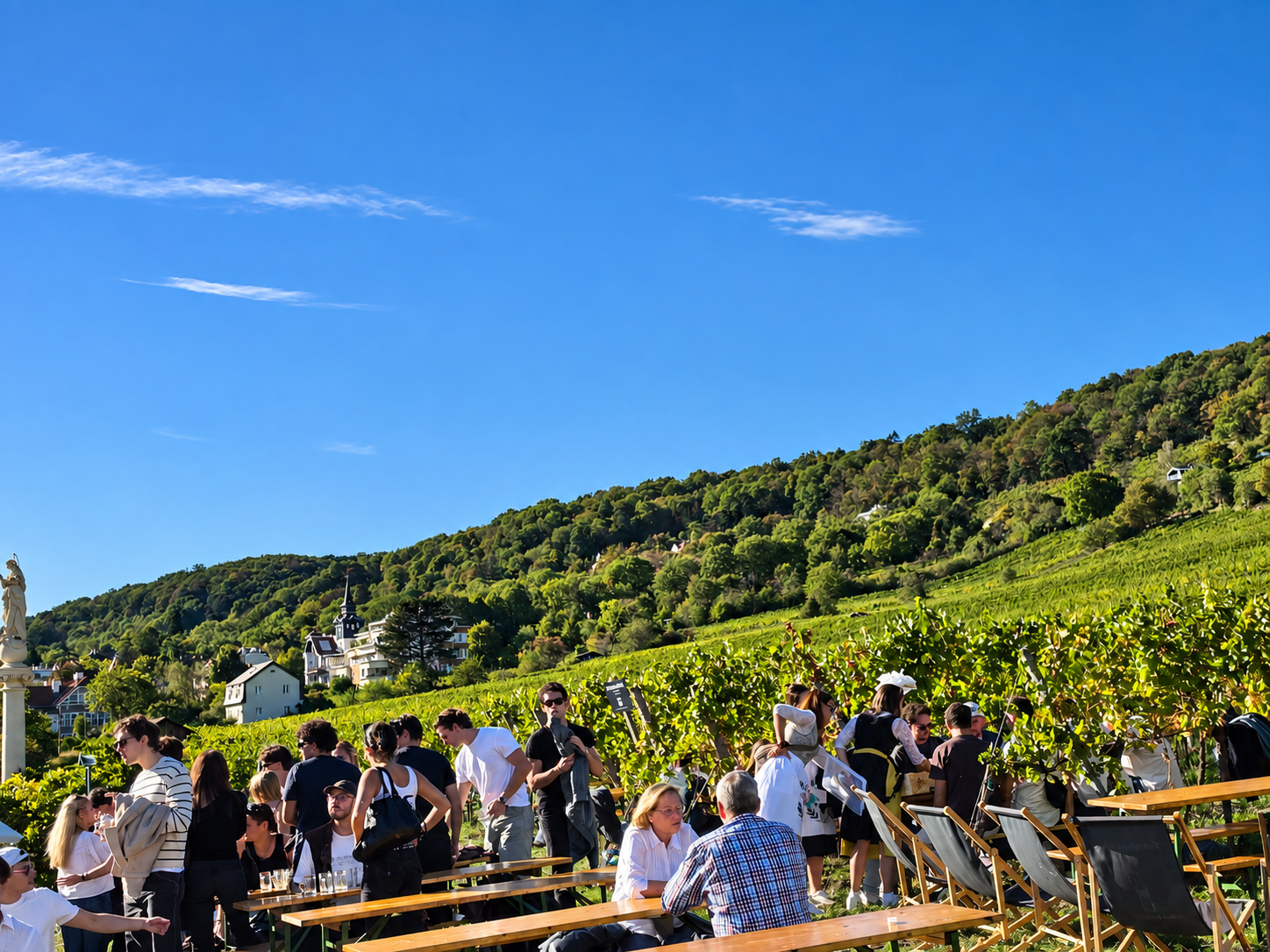
Visitors could choose individual sections, stop at local wineries, take a break over a glass of wine and something to eat, and then either continue walking or make their way back into the city.
It is precisely this relaxed format that makes the Weinwandertag attractive to such a broad audience – from serious wine enthusiasts and keen hikers to families with children and tourists looking to discover a less familiar side of Vienna.
Sieh dir diesen Beitrag auf Instagram an
Tasting Wine Where It Is Actually Made
Part of the special charm of the Weinwandertag is that the wine is not tasted in a conventional exhibition hall or at a trade fair, but practically where it is produced.
The trails wind their way through vineyards and past wine estates, while numerous winemakers and traditional Heuriger taverns along the routes set up stops for visitors.
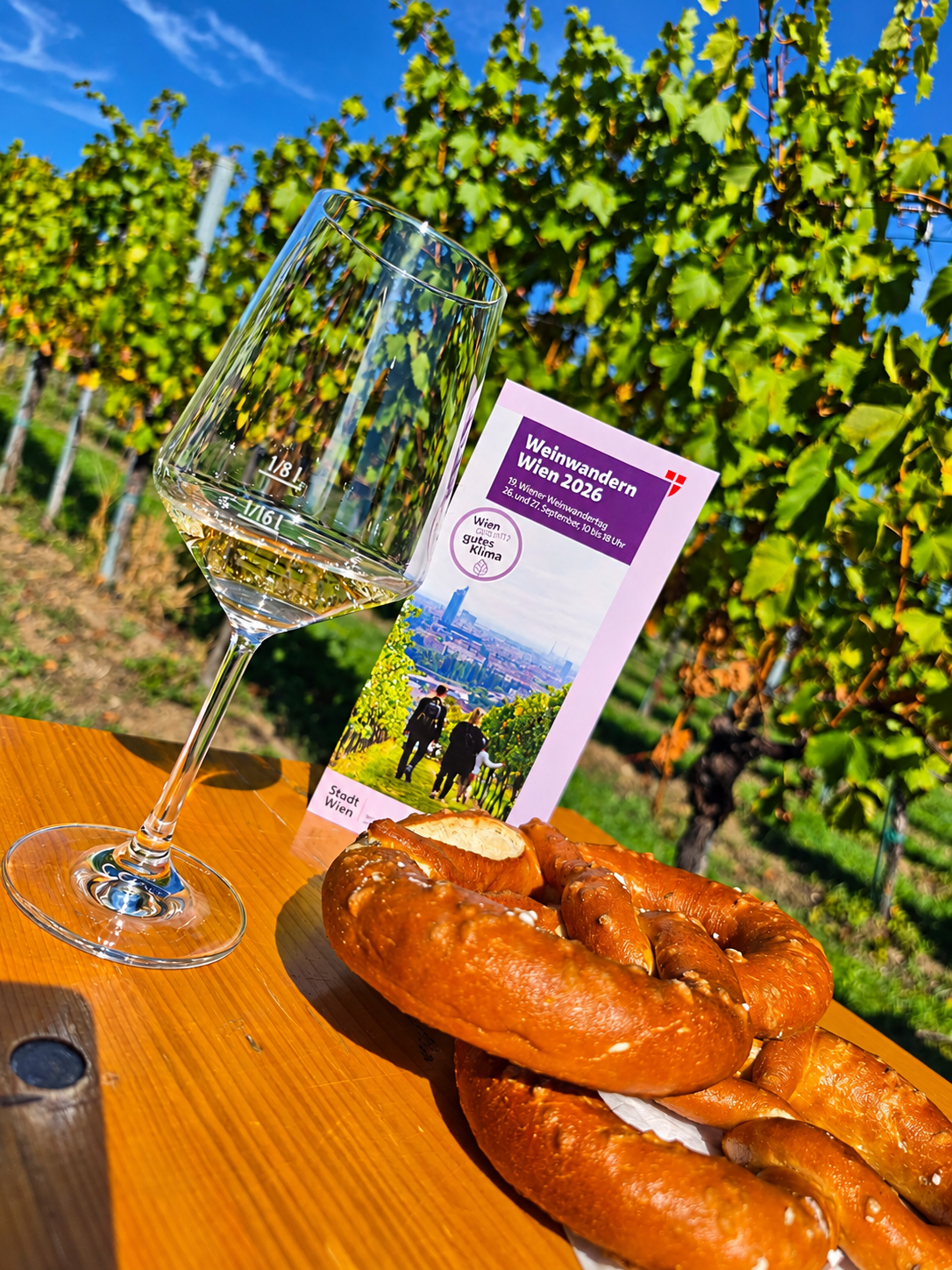
Viennese wines are accompanied by local specialities, cold platters, spreads, cheeses and other dishes traditionally associated with Vienna’s wine-tavern culture.
Among the stops on this year’s routes was the city-owned Weingut Wien Cobenzl, where visitors could sample wines from Cobenzl while also discovering regional products.
But the Weinwandertag is about much more than wine tasting.
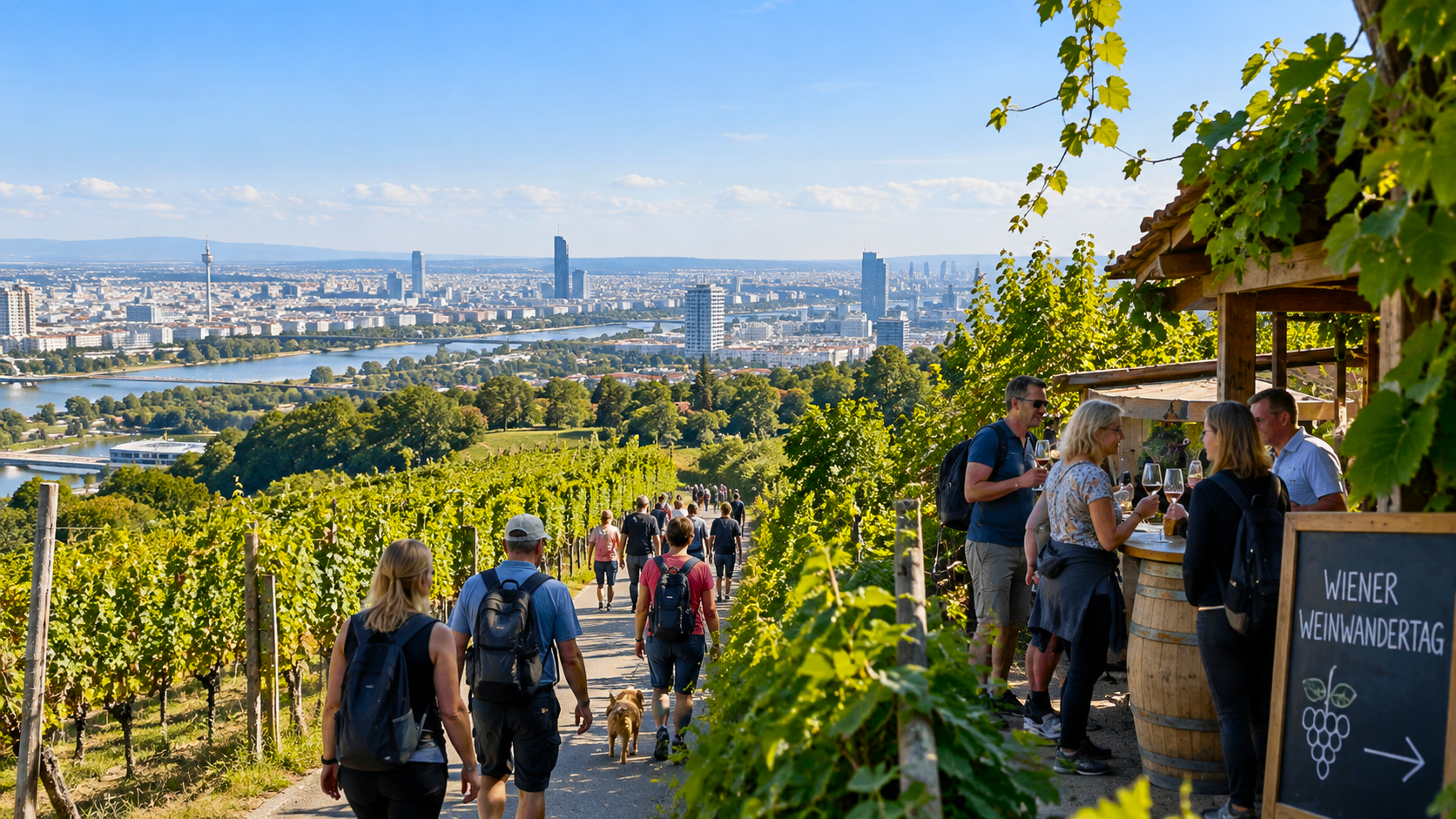
The vineyard-covered slopes to the north and west of the city centre offer sweeping views across Vienna, the Danube and the surrounding hills. For many visitors, the walk itself is every bit as important as the glass of wine waiting at the next stop.
Tens of Thousands Take to the Vineyards
The scale of the event’s popularity is reflected in the number of visitors it attracts.
Ahead of this year’s Weinwandertag, Austrian public broadcaster ORF reported that around 40,000 people were expected across the four routes.
Such figures may come as a surprise to those who associate Vienna primarily with urban life. For the Viennese, however, the vineyards are much more than a tourist attraction.
They are part of the city’s identity.
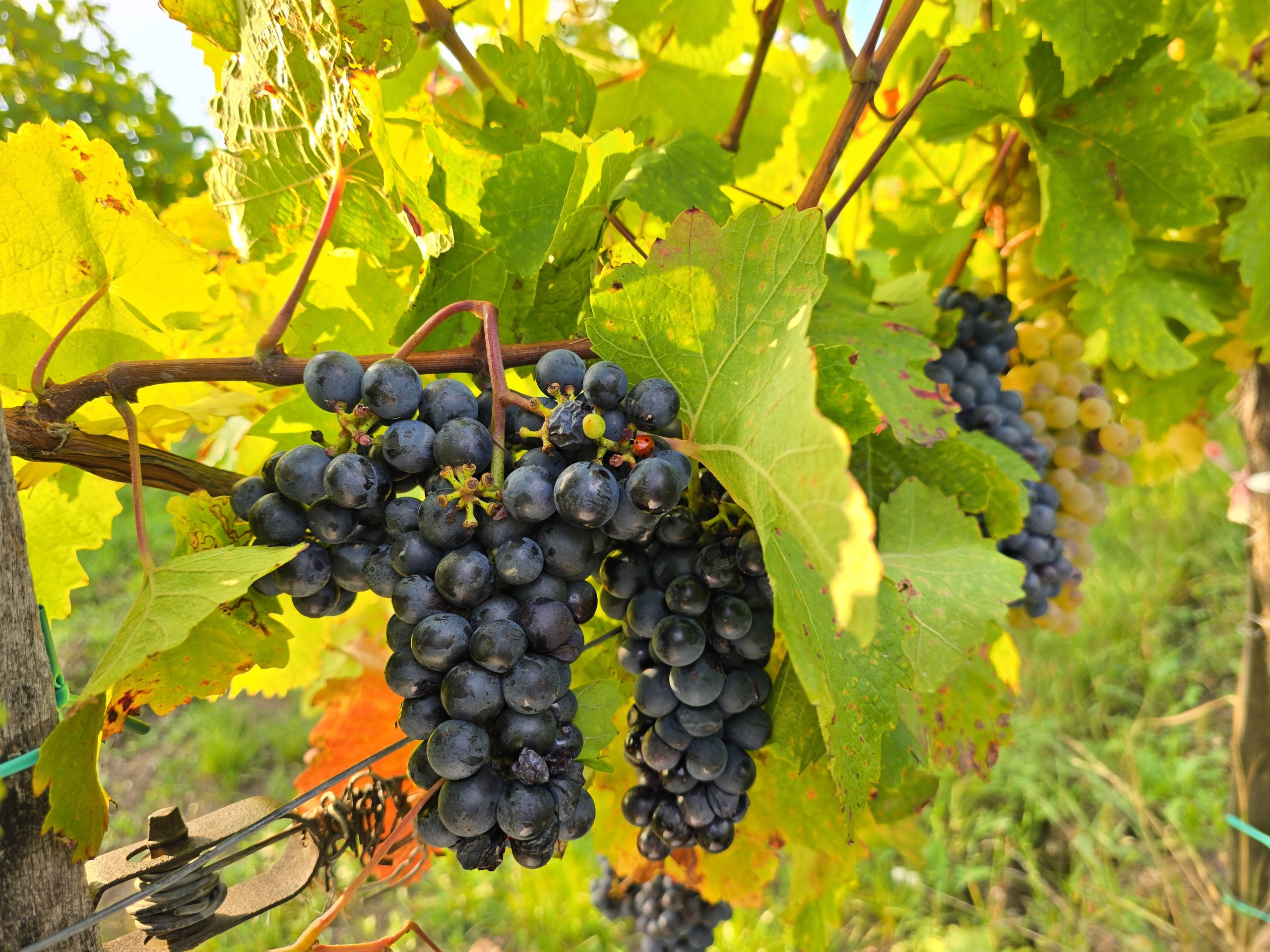
Nussberg, Kahlenberg, Bisamberg, Neustift, Stammersdorf and Mauer are just some of the areas where wine-growing traditions have been cultivated for centuries.
As a result, only a few kilometres from the heart of the Austrian capital, visitors can suddenly find themselves walking between rows of vines, with views extending across almost the entire city.
What Exactly Is a “Heuriger”?
It is difficult to fully understand the Weinwandertag without another distinctly Austrian – and particularly Viennese – institution: the Heuriger.
The word “Heuriger” can refer both to young wine from the current vintage and to a traditional wine tavern where a winemaker serves their own wine.
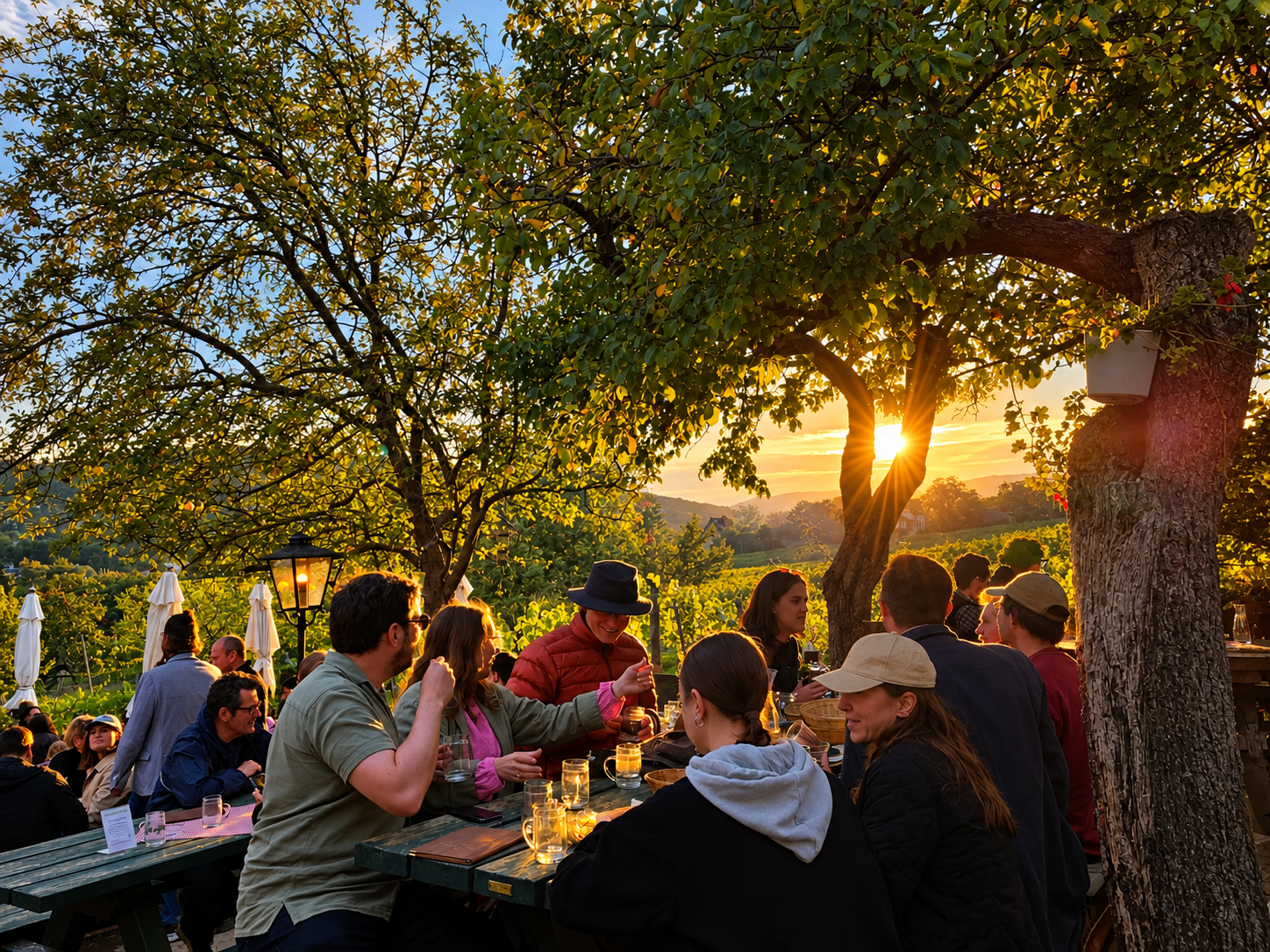
Unlike a conventional restaurant, the atmosphere at a Heuriger is generally simpler, more informal and decidedly relaxed. Guests tend to linger at the tables, wine is ordered by the glass or in larger quantities, and it is usually accompanied by straightforward local food.
It is precisely this Heuriger culture that has given Vienna’s vineyards their unique social significance.
People do not come here simply to taste wine. They come for the company, the views, the food and the atmosphere.
During the Weinwandertag, this tradition effectively leaves the wine taverns and moves directly into the vineyards.
A Metropolis Where Vines Are More Than Decoration
What makes Vienna particularly unusual is that viticulture has not survived merely as tourist folklore.
Wine is still actively produced across approximately 600 hectares of vineyards within the city, while numerous wine-growing businesses continue a tradition deeply intertwined with the history of the Austrian capital.
Among Vienna’s best-known wines, Wiener Gemischter Satz holds a particularly important place and has become one of the symbols of the city’s wine culture.
In a traditional Wiener Gemischter Satz vineyard, different grape varieties grow together in the same vineyard, are harvested together and are also processed together. This method is an integral part of Vienna’s historic winemaking tradition.
The Weinwandertag therefore represents something broader than an ordinary tourist event.
It reminds both residents and visitors that behind the postcard images of Vienna’s vineyards lies a living agricultural, culinary and cultural tradition.
Vienna from a Perspective the Ringstrasse Cannot Offer
Anyone who knows Vienna primarily through Stephansplatz, Kärntner Strasse, the Hofburg or Schönbrunn can discover an entirely different city during the Weinwandertag.
Instead of trams and city traffic – rows of vines.
Instead of shop windows – small stands run by local winemakers.
Instead of grand façades – panoramic views of the Danube and Vienna’s rooftops.
That contrast is one of the event’s greatest attractions.
Within a matter of minutes by public transport, visitors can leave the centre of a major European capital and arrive in landscapes that, in places, resemble the wine villages of Lower Austria far more than the territory of a large city.
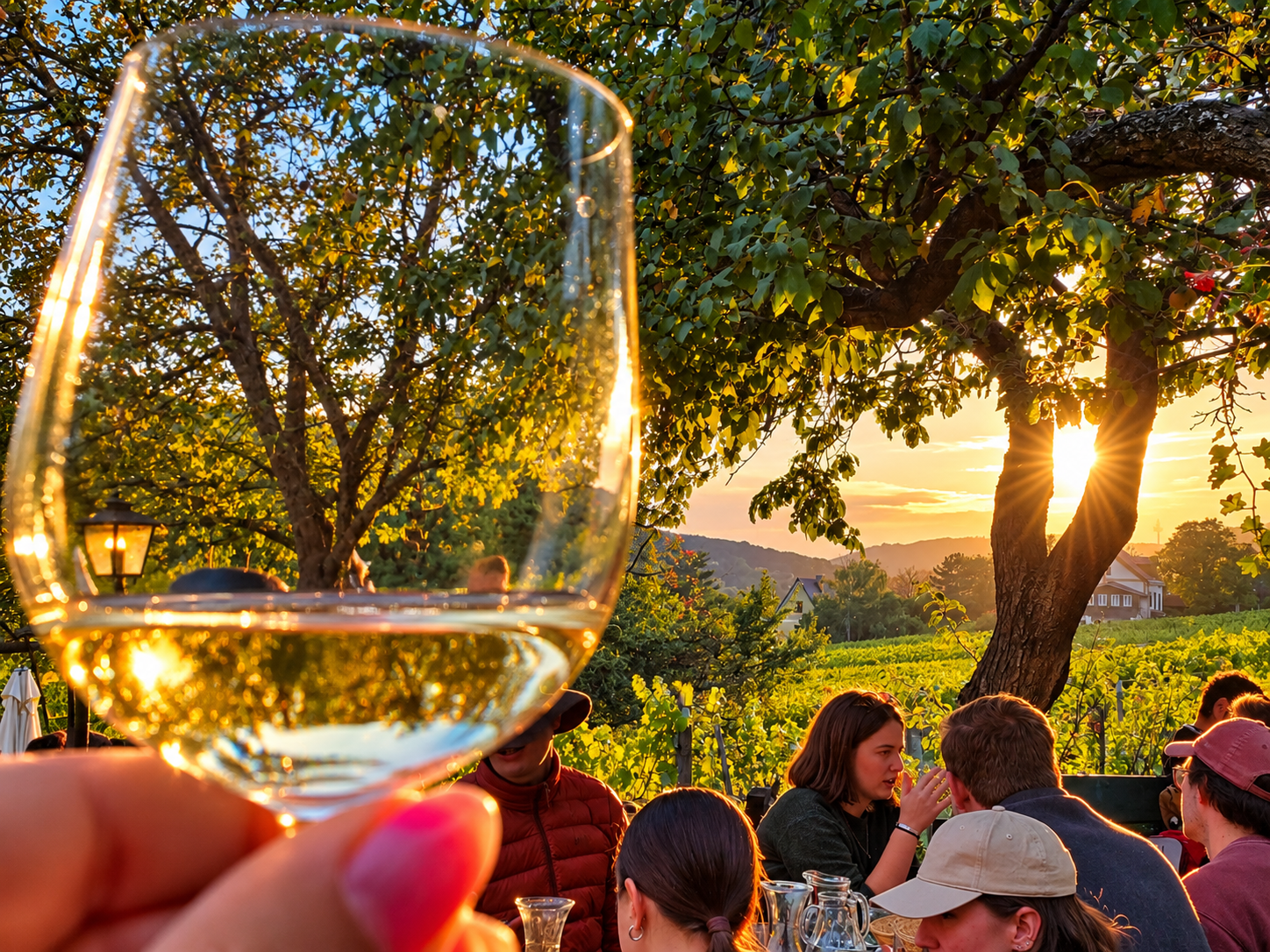
And then, with a glass of Viennese wine in hand, the skyline of the metropolis suddenly appears again in the distance.
Autumn in Vienna Begins Among the Vineyards
The Wiener Weinwandertag is therefore neither a conventional wine festival nor simply an organised hike.
It brings together two traditions that Vienna has carefully preserved: a love of the outdoors and a deeply rooted culture of local wine.
For two days in September, the vineyards become an enormous open-air promenade where Viennese residents, tourists, families, hikers and wine lovers meet along the trails.
And perhaps the Weinwandertag illustrates one of the Austrian capital’s lesser-known qualities better than almost anything else:
In Vienna, you do not have to leave the city to escape to the vineyards – you simply board public transport and travel a few stops beyond the centre.
As autumn slowly begins to change the colour of the leaves above the Danube, thousands of people did exactly that last weekend – swapping city streets for paths between the vines and once again demonstrating why, in Vienna, wine is not merely a drink.
It is part of the city’s identity.
Text: Svetlana Nenadovic Glusac
Photo & Video Copyright: Diplomacy & Commerce Austria