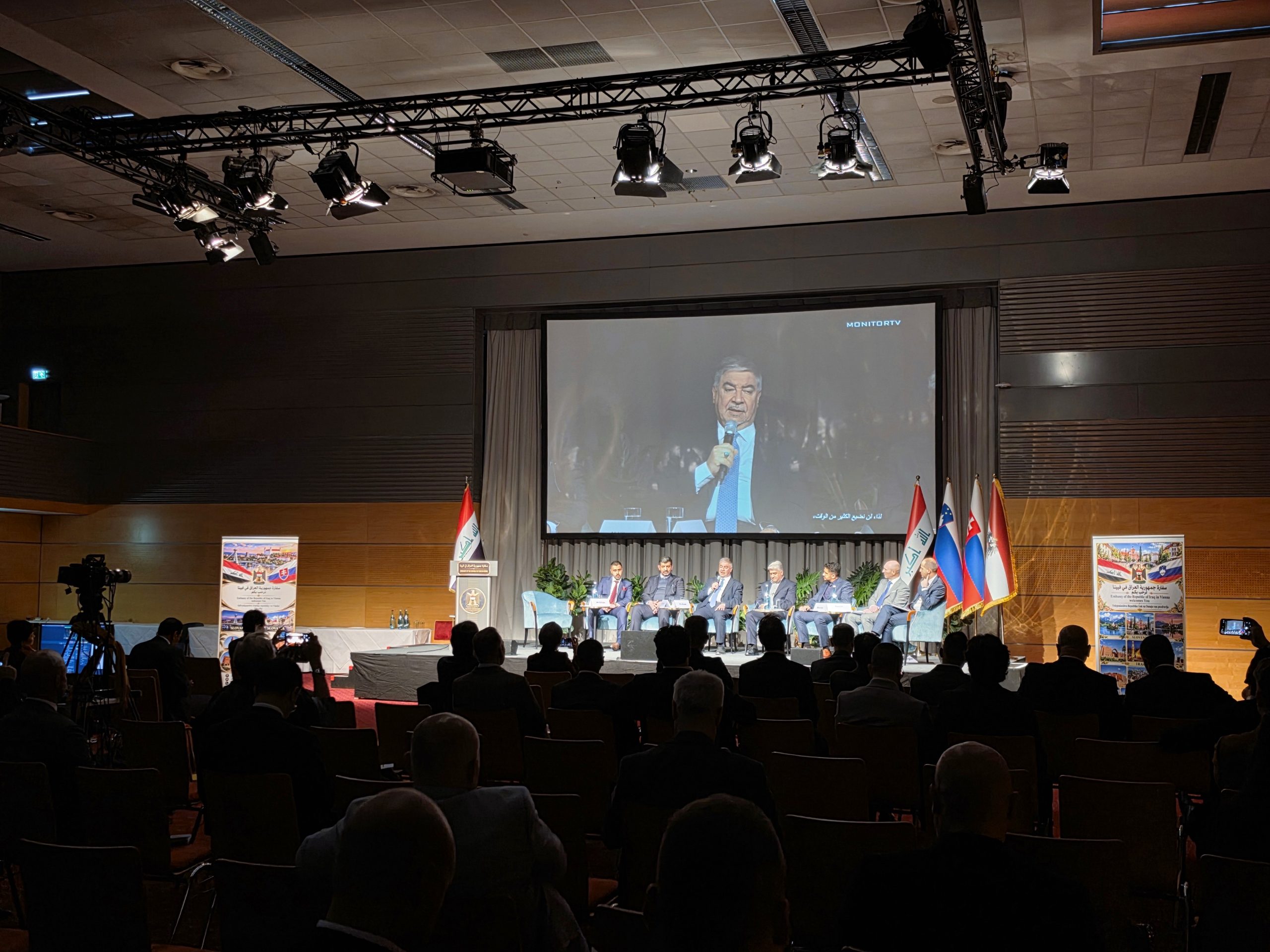
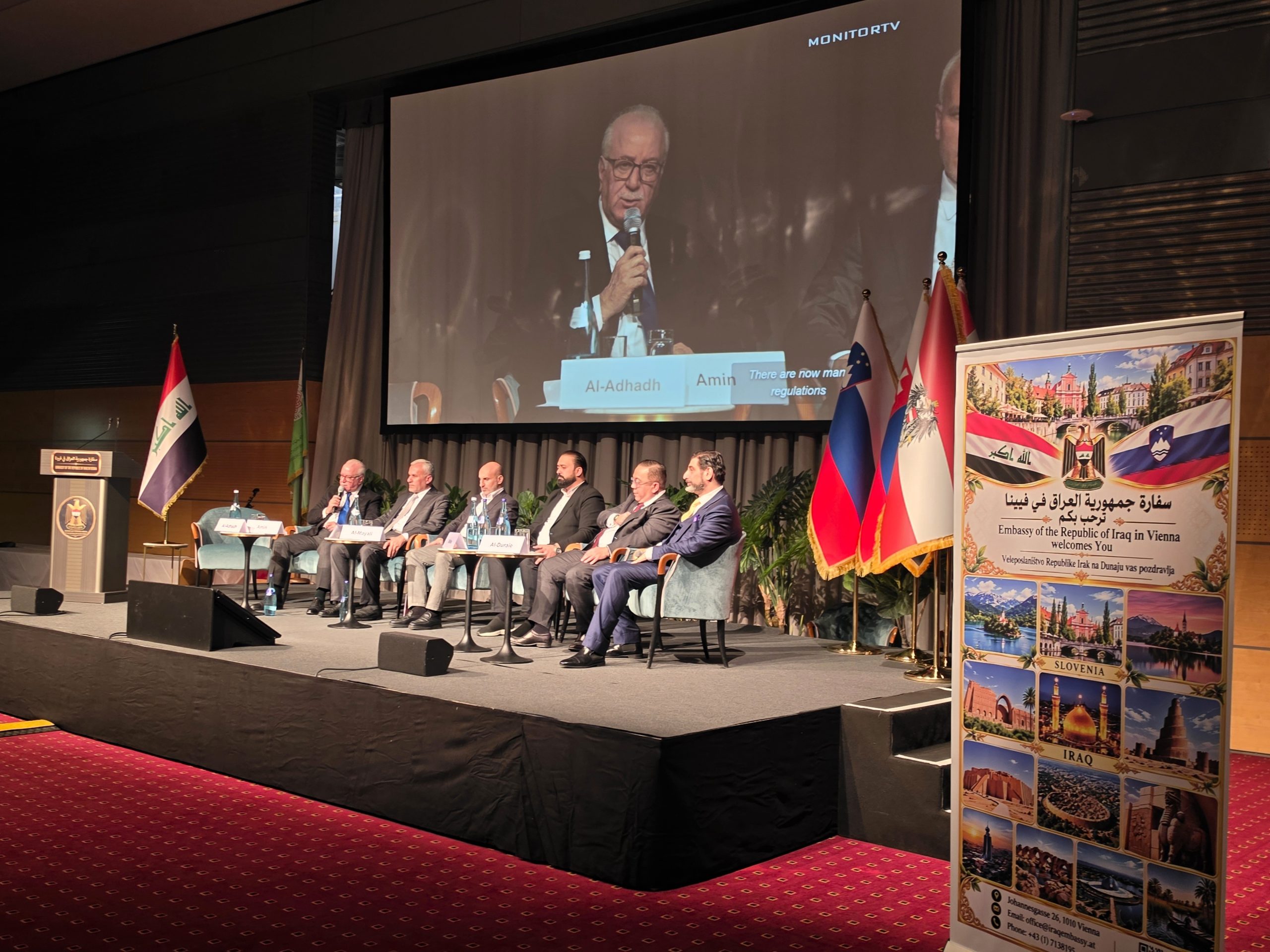
International business delegations, senior government officials, diplomats and leading entrepreneurs from Austria, Iraq, Syria, Saudi Arabia and other Arab countries gathered in Vösendorf, near Vienna, on 10–11 November 2026. The two-day forum focused on investment, infrastructure, energy, agriculture and healthcare, highlighting opportunities to strengthen economic cooperation and build sustainable partnerships between Europe and the Arab world.
Vienna, November 2026 – The 16th Arab-Austrian Economic Forum & Exhibition took place on 10–11 November 2026 at the Eventhotel Pyramide in Vösendorf, just outside Vienna. Organised by the Austro-Arab Chamber of Commerce (AACC) in cooperation with the Embassy of the Republic of Iraq in Vienna, the event brought together representatives of governments, diplomatic missions, chambers of commerce, financial institutions and the international business community.
The forum served as an important platform for economic dialogue, investment promotion and the development of new business partnerships. Alongside delegations from Austria, Iraq, Syria and Saudi Arabia, the programme highlighted opportunities for cooperation with other Arab countries and European partners, particularly Slovakia and Slovenia.
A central feature of this year’s event was the Iraq-Austria-Europe Business Economic Forum, which placed special emphasis on strengthening economic relations between Iraq, Austria and the wider European market.
The overarching objective was to deepen existing commercial ties, identify emerging investment opportunities and encourage long-term cooperation across strategically important economic sectors.
Day One: Agriculture, Transport Infrastructure and Renewable Energy
The opening day of the forum addressed some of the most pressing economic challenges and opportunities shaping international markets.
Following the official opening ceremony, the first session, “Agriculture, Permaculture & Food Security,” explored the importance of sustainable agricultural development, innovative farming practices and long-term food security.
Against the backdrop of climate change, increasing pressure on natural resources and growing global demand for food, international cooperation in agriculture and sustainable food production remains a key priority for both European and Arab economies.
The afternoon programme continued with the second session, “Transportation, Railway & Railway Infrastructure,” focusing on the development of modern transport systems, railway networks and investment opportunities in major infrastructure projects.
Transport connectivity and efficient logistics networks are essential drivers of economic growth, facilitating international trade, improving market access and strengthening regional integration.
The first day concluded with a session dedicated to “Energy & Renewable Energy.” Discussions centred on the energy sector and the growing importance of renewable energy technologies, sustainable power generation and international cooperation in the transition towards more diversified energy systems.
The energy sector represents a particularly promising area for cooperation between Austria and Arab countries, combining European technological expertise with the region’s investment potential and expanding energy requirements.
Day Two: Iraq as a Strategic Economic Partner for Europe
The second day, 11 November, was dedicated to the Iraq-Austria-Europe Business Economic Forum, highlighting Iraq’s economic potential and opportunities for closer cooperation with Austria and other European countries.
Following the official opening and a networking session, the programme continued with a high-level roundtable on “Investment & Banking.”
The discussion focused on investment prospects, financial frameworks and the role of banking institutions in supporting cross-border economic initiatives and facilitating international business cooperation.
A second roundtable, “Healthcare and Pharmaceutical Industry,” addressed opportunities in healthcare services, medical infrastructure and pharmaceutical development.
With growing demand for modern healthcare solutions, the sector offers significant potential for partnerships involving technology transfer, medical innovation, pharmaceutical production and the modernisation of healthcare systems.
For Austrian and European companies, these areas represent opportunities to contribute expertise and innovative solutions while establishing long-term partnerships in emerging markets.
Sieh dir diesen Beitrag auf Instagram an
Iraq, Slovakia and Slovenia: Expanding Regional Economic Cooperation
One of the notable elements of the second day’s programme was a dedicated roundtable bringing together perspectives from Iraq, Slovakia and Slovenia.
The discussions were structured around two key themes: “Linking Education and Technology” and “Construction, Infrastructure and Water.”
The first theme highlighted the importance of connecting education, research and technological innovation to support economic development and improve international competitiveness.
The second focused on investment and cooperation opportunities in construction, infrastructure development and water management – sectors that are increasingly important for sustainable economic growth.
These areas offer considerable scope for knowledge exchange, technological cooperation and the development of joint projects involving European and Iraqi partners.
The participation of Slovakia and Slovenia also reflected the forum’s broader ambition to extend economic cooperation beyond traditional bilateral relationships and encourage stronger links between Arab markets and Central and Southeastern Europe.
High-Level Delegations from Iraq, Syria and Saudi Arabia
The international significance of the forum was reflected in the high-level participation announced ahead of the event.
The Republic of Iraq was expected to be represented by senior officials, including H.E. Mohammad Nouri Al-Karbuli, Minister of Industry and Minerals; Ms. Sarwa Abdul Wahid, Minister of Environment; and H.E. Adel Al-Yasiri, President of the National Investment Commission.
The announced Iraqi delegation also included deputy ministers responsible for agriculture and transport, members of parliament, parliamentary committee chairs and approximately 30 business representatives.
From the Syrian Arab Republic, the list of expected participants included H.E. Prof. Dr. Yarub Badr, Minister of Transport; H.E. Alaa El-Ali, President of the Federation of Syrian Chambers of Commerce; and Mr. Mohammad Said Check-Al Kar, President of the Aleppo Chamber of Commerce and Vice President of the Federation of Syrian Chambers of Commerce.
The Kingdom of Saudi Arabia was expected to be represented by prominent business figures, including Mr. Ali Al-Khayar Alkahtani, President of the Saudi-Austrian Business Council, and Mr. Sultan AlSudairi, a leading Saudi business representative.
H.E. Abdallah Saleh Kamel, President of the Federation of Saudi Chambers and President of the General Union of Arab Chambers, was also listed as a potential participant, subject to confirmation.
The organisers additionally anticipated the participation of presidents and vice presidents of chambers of commerce from Qatar, Kuwait, the United Arab Emirates and Libya, alongside representatives of other Arab countries.
H.E. Prof. Dr. Khaled Hanafi, Secretary General of the Union of Arab Chambers, was among the senior representatives announced ahead of the forum.
The planned participation of such a broad range of government officials, institutional representatives and business leaders underlined the importance of economic diplomacy in fostering international cooperation.
Economic Diplomacy, Investment and International Networking
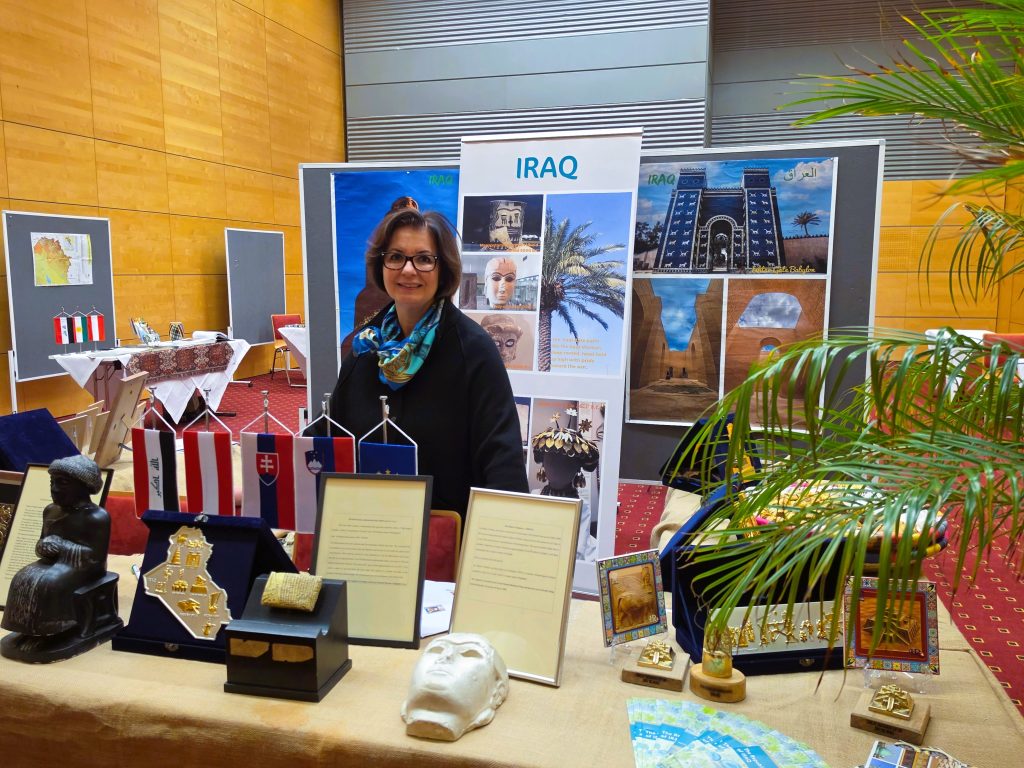
Beyond the conference sessions, the accompanying exhibition provided a platform for direct engagement between businesses, investors, government institutions and economic organisations.
A key element of the event was the opportunity for business-to-business (B2B) and business-to-government (B2G) meetings, designed to facilitate direct communication, identify potential investment projects and encourage new commercial partnerships.
In an increasingly complex global economic environment, economic diplomacy plays an essential role in strengthening international relationships, diversifying trade partnerships and creating opportunities for sustainable growth.
For Austrian and European companies, Arab markets offer considerable potential across infrastructure, renewable energy, environmental technologies, healthcare, industrial development and transport.
At the same time, Arab investors and businesses can benefit from European technological expertise, advanced industrial solutions and access to established commercial networks.
The forum therefore represented more than an opportunity for professional networking. It provided a setting in which economic interests, institutional cooperation and private-sector initiatives could converge.
Vienna Strengthens Its Role as a Hub for International Business and Diplomacy
The 16th edition of the Arab-Austrian Economic Forum once again highlighted the Vienna region’s position as an important meeting point for international business, diplomacy and economic cooperation.
Austria’s geographical location, established economic institutions and strong connections with Central and Southeastern Europe make it a valuable partner for companies and investors seeking to develop closer relations between European and Arab markets.
By bringing together government representatives, diplomatic missions, chambers of commerce, investors and business leaders, the forum created opportunities for dialogue on shared economic priorities and potential future projects.
The combination of sector-specific discussions, high-level participation, investment dialogue and professional networking demonstrated the importance of maintaining open channels of communication between international partners.
The 16th Arab-Austrian Economic Forum & Exhibition and the Iraq-Austria-Europe Business Economic Forum reaffirmed the importance of strengthening economic ties between Austria, Iraq, the Arab world and Europe. Above all, the two-day gathering highlighted a shared ambition: to transform international dialogue into lasting partnerships, practical business opportunities and sustainable economic cooperation.
Deutsch:
16. Arabisch-Österreichisches Wirtschaftsforum: Wien als Brücke zwischen Europa und der arabischen Welt
Internationale Wirtschaftsdelegationen, hochrangige Regierungsvertreter und führende Unternehmer aus Österreich, dem Irak, Syrien, Saudi-Arabien und weiteren arabischen Staaten kamen am 10. und 11. November 2026 in Vösendorf bei Wien zusammen. Im Mittelpunkt des zweitägigen Forums standen Investitionen, Infrastruktur, Energie, Landwirtschaft und Gesundheitswirtschaft sowie die Stärkung der wirtschaftlichen Zusammenarbeit zwischen Europa und der arabischen Welt.
Wien, November 2026 – Am 10. und 11. November 2026 fand im Eventhotel Pyramide in Vösendorf bei Wien das 16. Arabisch-Österreichische Wirtschaftsforum mit begleitender Ausstellung (16th Arab-Austrian Economic Forum & Exhibition) statt. Die Veranstaltung wurde von der Austro-Arabischen Handelskammer (AACC) in Zusammenarbeit mit der Botschaft der Republik Irak in Wien organisiert.
Das internationale Wirtschaftsforum bot eine Plattform für den Dialog zwischen politischen Entscheidungsträgern, Diplomaten, Investoren, Handelskammern und führenden Wirtschaftsvertretern. Neben Delegationen aus Österreich, dem Irak, Syrien und Saudi-Arabien standen auch weitere arabische Länder sowie europäische Partner, insbesondere die Slowakei und Slowenien, im Fokus.
Mit dem parallel ausgerichteten Iraq-Austria-Europe Business Economic Forum wurde die wirtschaftliche Zusammenarbeit mit dem Irak besonders hervorgehoben. Ziel der Veranstaltung war es, bestehende Geschäftsbeziehungen zu vertiefen, neue Investitionsmöglichkeiten aufzuzeigen und langfristige Partnerschaften zwischen europäischen und arabischen Märkten zu fördern.
Erster Konferenztag: Landwirtschaft, Verkehrsinfrastruktur und erneuerbare Energien
Der erste Veranstaltungstag stand im Zeichen zentraler wirtschaftlicher Zukunftsfragen und strategischer Kooperationsmöglichkeiten.
Nach der offiziellen Eröffnung des Forums widmete sich die erste Fachsitzung dem Themenkomplex „Agriculture, Permaculture & Food Security“. Im Mittelpunkt standen die nachhaltige Entwicklung der Landwirtschaft, innovative Anbaumethoden sowie die langfristige Sicherung der Lebensmittelversorgung.
Angesichts globaler Herausforderungen wie Klimawandel, Ressourcenknappheit und wachsender Bevölkerungszahlen gewinnt die internationale Zusammenarbeit in diesen Bereichen zunehmend an Bedeutung.
Im Anschluss an die Mittagspause wurde das Programm mit der zweiten Sitzung zum Thema „Transportation, Railway & Railway Infrastructure“ fortgesetzt. Dabei rückten die Entwicklung moderner Verkehrssysteme, der Ausbau von Schienennetzen und Investitionsmöglichkeiten in die Transportinfrastruktur in den Vordergrund.
Den Abschluss des ersten Konferenztages bildete die dritte Sitzung „Energy & Renewable Energy“, die sich mit dem Energiesektor und den Perspektiven erneuerbarer Energien beschäftigte. Insbesondere der Ausbau nachhaltiger Energieversorgung und die Zusammenarbeit bei zukunftsorientierten Energietechnologien zählen zu den bedeutenden Potenzialen der wirtschaftlichen Beziehungen zwischen Österreich und den arabischen Staaten.
Zweiter Konferenztag: Der Irak als strategischer Wirtschaftspartner Europas
Der 11. November stand im Zeichen des Iraq-Austria-Europe Business Economic Forum, das die wirtschaftlichen Beziehungen zwischen dem Irak, Österreich und weiteren europäischen Ländern in den Mittelpunkt stellte.
Nach der offiziellen Eröffnung und einer Networking-Pause begann das Fachprogramm mit einem hochrangigen Roundtable zum Thema „Investment & Banking“. Der Schwerpunkt lag auf Investitionsperspektiven, Finanzierungsstrukturen und der Bedeutung des Bankensektors für die Entwicklung grenzüberschreitender Wirtschaftsprojekte.
Ein weiterer Roundtable widmete sich dem Bereich „Healthcare and Pharmaceutical Industry“. Die Gesundheitswirtschaft und die pharmazeutische Industrie bieten vielfältige Möglichkeiten für internationale Kooperationen, insbesondere im Hinblick auf medizinische Infrastruktur, technologische Innovationen und die Weiterentwicklung der Gesundheitsversorgung.
Irak, Slowakei und Slowenien: Neue Perspektiven für regionale Zusammenarbeit
Ein besonderer Programmpunkt des zweiten Tages war der Roundtable zur wirtschaftlichen Zusammenarbeit zwischen dem Irak, der Slowakei und Slowenien.
Im Mittelpunkt standen zwei Themenbereiche: „Linking Education and Technology“ sowie „Construction, Infrastructure and Water“.
Damit rückten sowohl die Verbindung von Bildung, Forschung und technologischer Entwicklung als auch konkrete wirtschaftliche Potenziale in den Bereichen Bauwirtschaft, Infrastruktur und Wassermanagement in den Fokus.
Gerade in diesen Sektoren eröffnen sich Möglichkeiten für den Austausch von Fachwissen, den Transfer moderner Technologien und die Entwicklung gemeinsamer Projekte.
Die Einbindung der Slowakei und Sloweniens unterstrich zugleich den Anspruch des Forums, die wirtschaftliche Zusammenarbeit über die traditionellen bilateralen Beziehungen zwischen Österreich und den arabischen Staaten hinaus auf eine breitere europäische Ebene auszuweiten.
Hochrangige Delegationen aus dem Irak, Syrien und Saudi-Arabien
Die Bedeutung des Wirtschaftsforums spiegelte sich auch in der angekündigten hochrangigen internationalen Beteiligung wider.
Aus der Republik Irak waren unter anderem Industrieminister Mohammad Nouri Al-Karbuli, Umweltministerin Sarwa Abdul Wahid sowie Adel Al-Yasiri, Präsident der Nationalen Investitionskommission, als Gäste und Redner angekündigt. Darüber hinaus umfasste die erwartete irakische Delegation stellvertretende Minister aus den Bereichen Landwirtschaft und Verkehr, Parlamentsmitglieder, Ausschussvorsitzende sowie rund 30 Wirtschaftsvertreter.
Auch die Arabische Republik Syrien war mit einer hochrangigen Delegation angekündigt. Zu den vorgesehenen Teilnehmern zählten Verkehrsminister Prof. Dr. Yarub Badr, Alaa El-Ali, Präsident des Verbandes der syrischen Handelskammern, sowie Mohammad Said Check-Al Kar, Präsident der Handelskammer von Aleppo und Vizepräsident des Verbandes der syrischen Handelskammern.
Aus dem Königreich Saudi-Arabien wurden unter anderem Ali Al-Khayar Alkahtani, Präsident des Saudi-Österreichischen Wirtschaftsrates, und der Wirtschaftsvertreter Sultan AlSudairi erwartet. Auch Abdallah Saleh Kamel, Präsident des Verbandes der saudischen Handelskammern und des Allgemeinen Verbandes Arabischer Handelskammern, war als möglicher Teilnehmer angekündigt, wobei seine Teilnahme zunächst noch unter Vorbehalt stand.
Darüber hinaus sah die Teilnehmerplanung die Präsenz von Präsidenten und Vizepräsidenten verschiedener Handelskammern aus Katar, Kuwait, den Vereinigten Arabischen Emiraten und Libyen vor. Als Vertreter des Verbandes Arabischer Handelskammern war dessen Generalsekretär, Prof. Dr. Khaled Hanafi, angekündigt.
Wirtschaftsdiplomatie und internationale Vernetzung im Mittelpunkt
Über die Fachkonferenzen hinaus bot das Forum mit seiner begleitenden Ausstellung einen Rahmen für direkte Kontakte zwischen Unternehmen, Investoren und staatlichen Institutionen.
Insbesondere die vorgesehenen Business-to-Business- (B2B) und Business-to-Government-Gespräche (B2G) sollten dazu beitragen, neue Geschäftsmöglichkeiten zu identifizieren, Investitionsprojekte anzustoßen und den Austausch zwischen öffentlichen und privaten Akteuren zu intensivieren.
Die Veranstaltung verdeutlichte die Rolle der Wirtschaftsdiplomatie als Instrument zur Förderung internationaler Kooperationen. In einer Zeit geopolitischer und wirtschaftlicher Veränderungen gewinnen verlässliche Partnerschaften, diversifizierte Handelsbeziehungen und der Zugang zu neuen Märkten zunehmend an Bedeutung.
Für österreichische und europäische Unternehmen bieten die arabischen Märkte Kooperationspotenziale in Bereichen wie Infrastruktur, Energie, Umwelttechnologie, Gesundheitswesen und industrieller Entwicklung. Gleichzeitig können arabische Investoren und Unternehmen von europäischem Know-how, technologischen Innovationen und etablierten Wirtschaftsnetzwerken profitieren.
Wien als internationaler Treffpunkt für Wirtschaft und Diplomatie
Mit der 16. Ausgabe des Arabisch-Österreichischen Wirtschaftsforums wurde die Bedeutung des Großraums Wien als Standort für internationalen Wirtschaftsdialog und diplomatische Begegnungen erneut unterstrichen.
Die Verbindung von Fachkonferenzen, hochrangigen Delegationen, Unternehmensgesprächen und internationalem Networking schuf einen Rahmen, um wirtschaftliche Interessen zusammenzuführen und neue Kooperationsperspektiven auszuloten.
Das 16. Arabisch-Österreichische Wirtschaftsforum und das Iraq-Austria-Europe Business Economic Forum setzten damit ein Zeichen für die weitere Vertiefung der Wirtschaftsbeziehungen zwischen Österreich, dem Irak, der arabischen Welt und Europa – mit dem Ziel, aus dem internationalen Dialog nachhaltige Partnerschaften und konkrete wirtschaftliche Perspektiven zu entwickeln.
Text: Svetlana Nenadovic Glusac
Fotos & Videos Copyright: Magazine Diplomacy & Commerce Austria