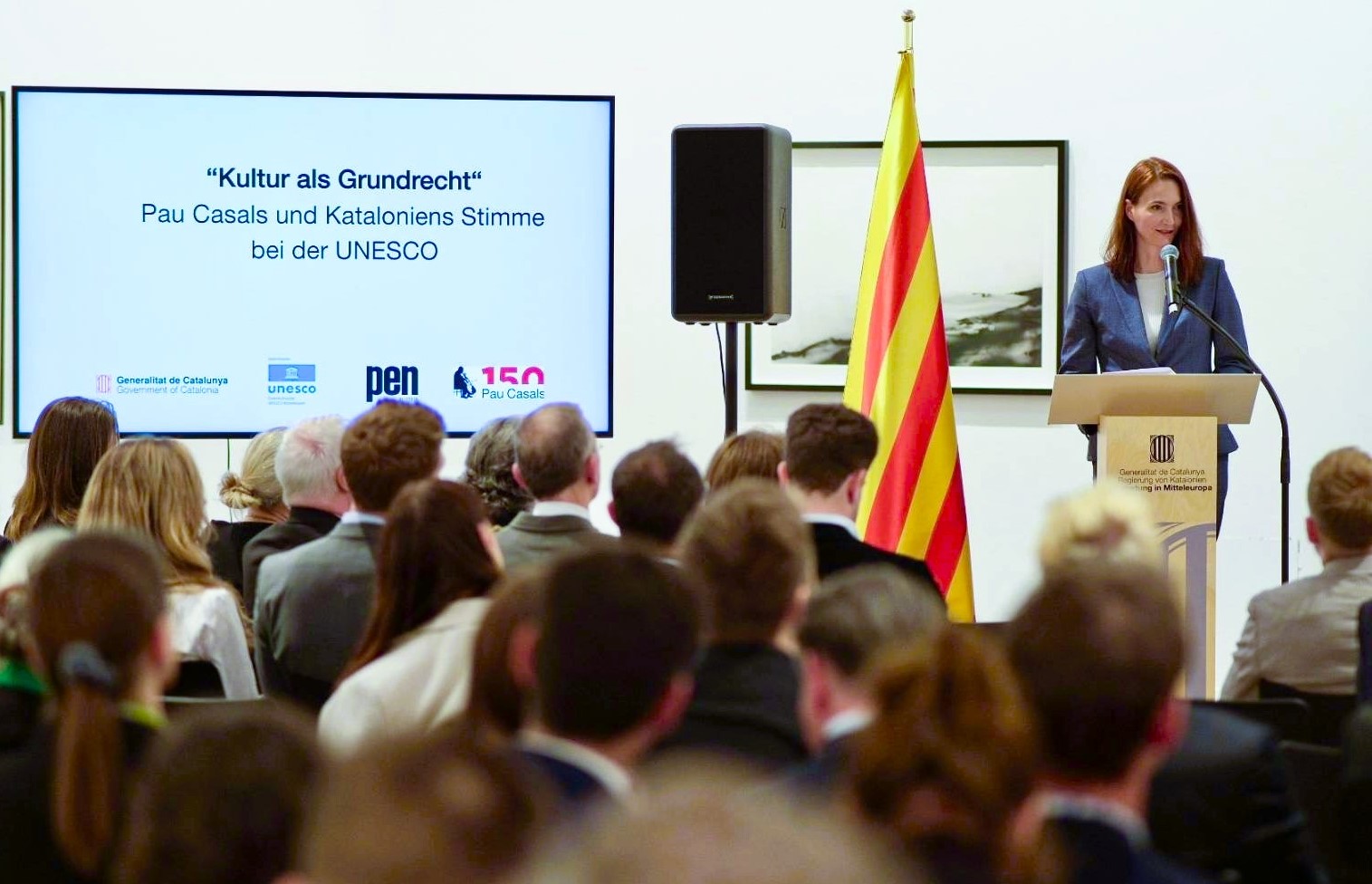
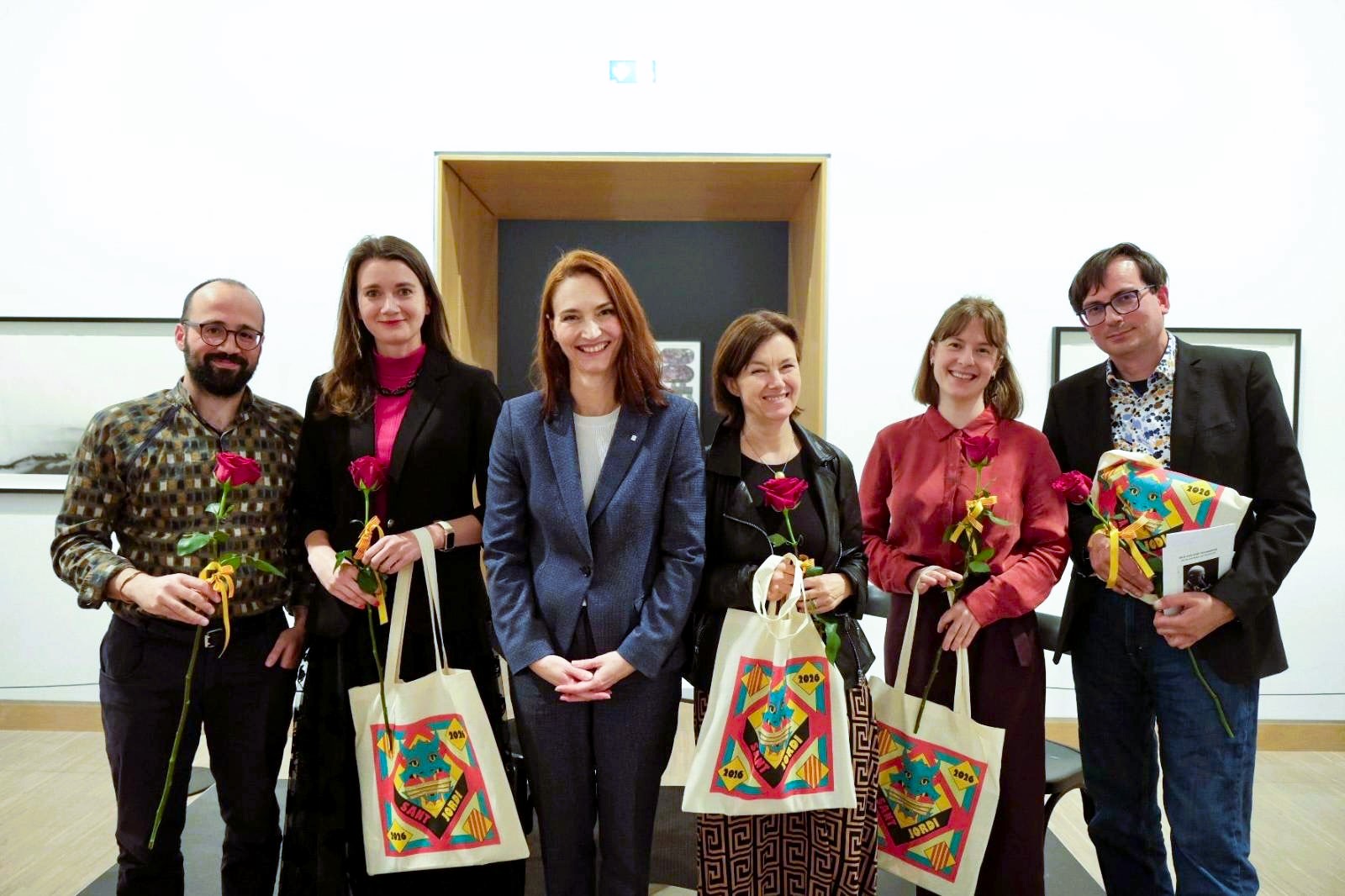
Wien, 23. April 2026 – Anlässlich des katalanischen Sankt-Georgs-Tag, Sant Jordi, sowie des UNESCO-Welttags des Buches veranstaltete die Delegation der Regierung Kataloniens für Mitteleuropa eine hochrangige Veranstaltung im Künstlerhaus in Wien. Unter dem Titel „Kunst und Kultur als Grundrecht“ und unter der Schirmherrschaft der Österreichische UNESCO-Kommission sowie in Zusammenarbeit mit dem Österreichischer PEN Club stand die verbindende Kraft von Kunst, Literatur und kultureller Vielfalt in einer demokratischen Gesellschaft im Mittelpunkt.
In diesem Zusammenhang erinnerte die Veranstaltung auch an den 150. Geburtstag des katalanischen Cellisten und Trägers der Friedensmedaille der Vereinten Nationen, Pau Casals, dessen künstlerisches und politisches Vermächtnis bis heute für Freiheit, Menschenwürde und demokratische Werte steht. Hochrangige Gäste aus Politik, Wirtschaft und Diplomatie sowie Vertreter der Zivilgesellschaft und im Ausland lebende Katalanen nahmen an der Veranstaltung teil.
Kunst als Stimme der Demokratie
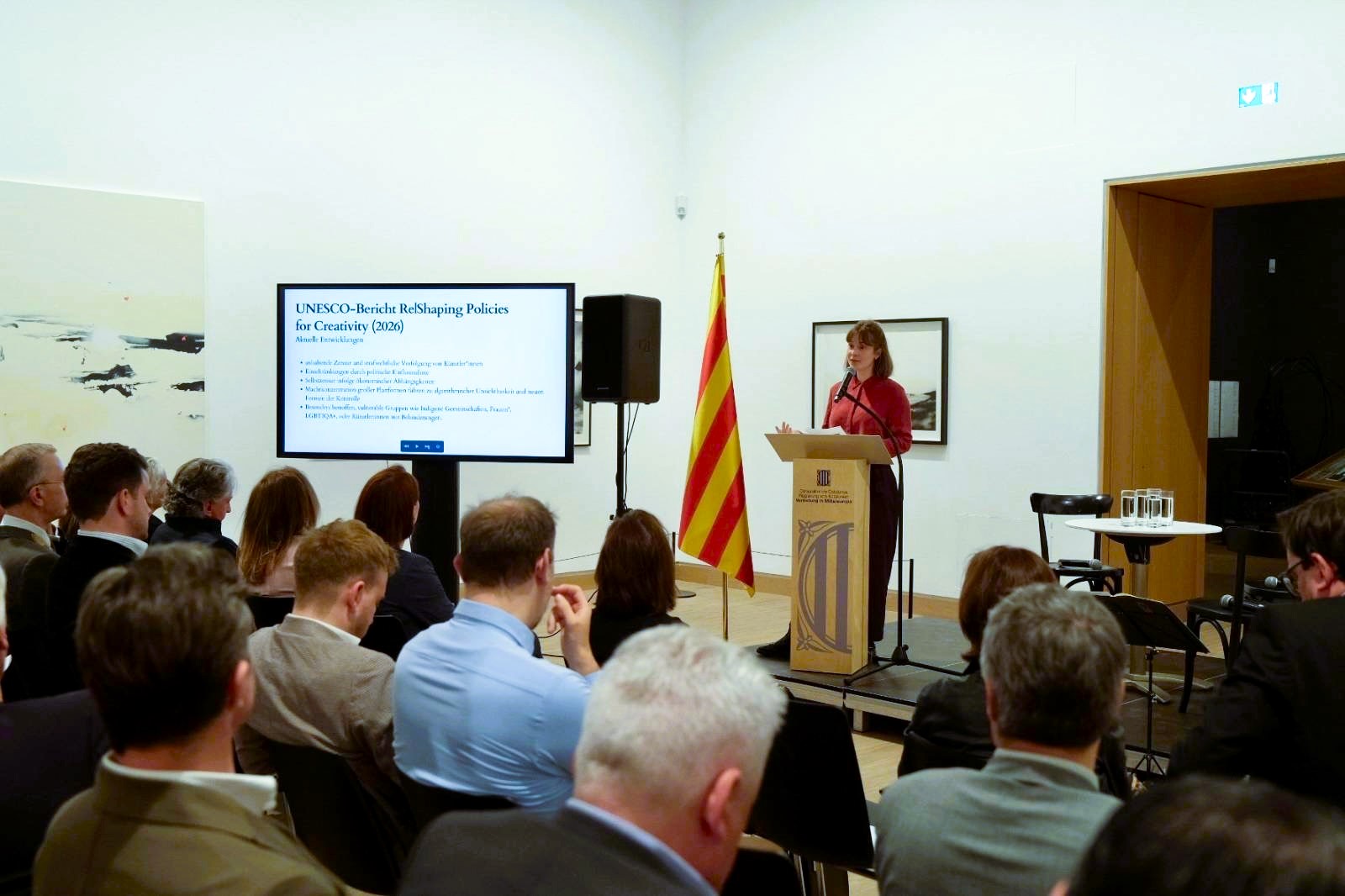
In ihrer Eröffnungsrede betonte die Delegierte der Regierung Kataloniens für Mitteleuropa, Krystyna Schreiber, die besondere Rolle der Kunst als gesellschaftliche Kraft:
„Wenn Kunst – wie im Fall von Pau Casals – zur Stimme der Demokratie wird, ist ihr Schutz keine Option, sondern eine fortwährende Verantwortung. Die UNESCO verkörpert diese Mission, und Katalonien unterstützt sie seit mehr als 40 Jahren aktiv in Zusammenarbeit mit der UNESCO im Dienst der kulturellen Vielfalt sowie des Schutzes von Sprache und Identität.“
Hervorgehoben wurde die zentrale Bedeutung der Kunst für die Demokratie sowie die Notwendigkeit, sie zu schützen und rechtlich zu verankern. Gerade in Zeiten, in denen viele Menschen das Vertrauen verlieren, Werte zunehmend infrage gestellt werden und gesellschaftliche Spannungen wachsen, kann Kunst als Vermittlerin wirken: Sie stärkt den Zusammenhalt und den Dialog, macht Ungerechtigkeiten sichtbar und gibt Impulse für Innovation.
Diese Perspektive prägte auch die Gesamterzählung der Veranstaltung – vom UNESCO-Welttag des Buches über das Exil von Pau Casals bis hin zur aktuellen gesellschaftspolitischen Lage in Europa. In Bezug auf Pau Casals wurde betont, dass Kunst besonders wirksam ist, wenn sie Haltung zeigt: Sein Engagement gegen Diktaturen und für Menschenrechte machte ihn weit über die Musikwelt hinaus zu einer globalen Stimme des Friedens.
Hochkarätiges Programm und internationale Perspektiven
In einer Keynote hob Klara Koštal, M.A., Leiterin der Abteilung „Vielfalt kultureller Ausdrucksformen“ der Österreichischen UNESCO-Kommission, die Bedeutung kultureller Vielfalt als zentrales Thema der internationalen Politik hervor. In ihrem Beitrag verwies sie auch auf den UNESCO-Bericht „Re|Shaping Policies for Creativity“ (2026).
Besonders betonte sie folgende Handlungsfelder: den Aufbau nachhaltiger Unterstützungsstrukturen für gefährdete und vertriebene Künstler (wie Residenzprogramme sowie rechtliche und psychosoziale Unterstützung), den Abbau restriktiver rechtlicher Rahmenbedingungen (wie Blasphemiegesetze oder strafrechtliche Bestimmungen zur Verleumdung) sowie die Sicherstellung eines niederschwelligen Zugangs zu spezialisierter Rechtsberatung, insbesondere im Umgang mit missbräuchlichen Klagen.
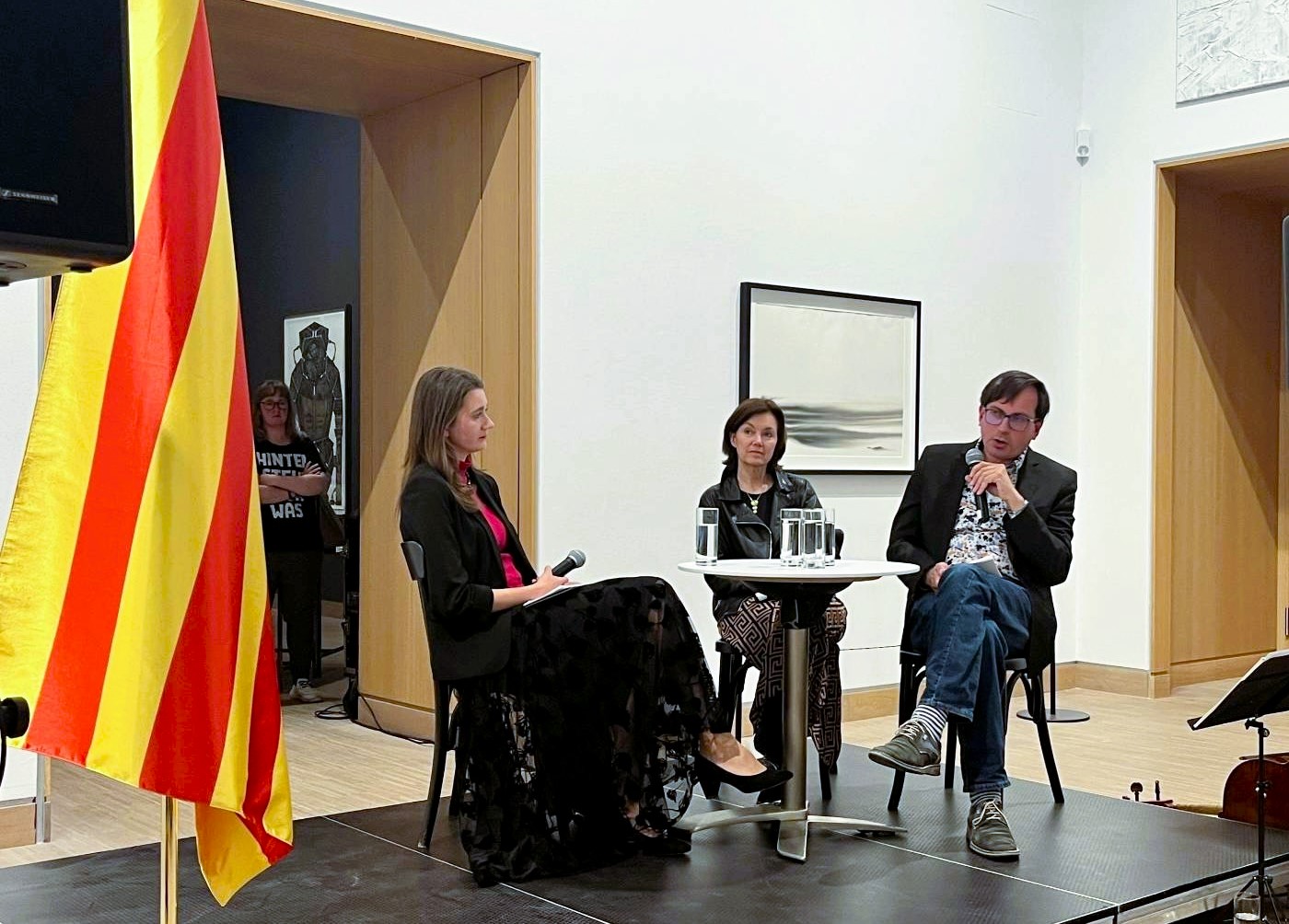
Im Anschluss diskutierten Dr. Marion Wisinger, Präsidentin des Österreichischen PEN Clubs, und Mag. Günther Oberhollenzer, M.A., künstlerischer Leiter des Künstlerhauses Wien, über die Rolle von Kunst und Kultur in der heutigen Gesellschaft. Die von Mag. Malwina Talik, M.A., moderierte Gesprächsrunde wurde durch eine lebhafte Diskussion mit dem Publikum ergänzt.
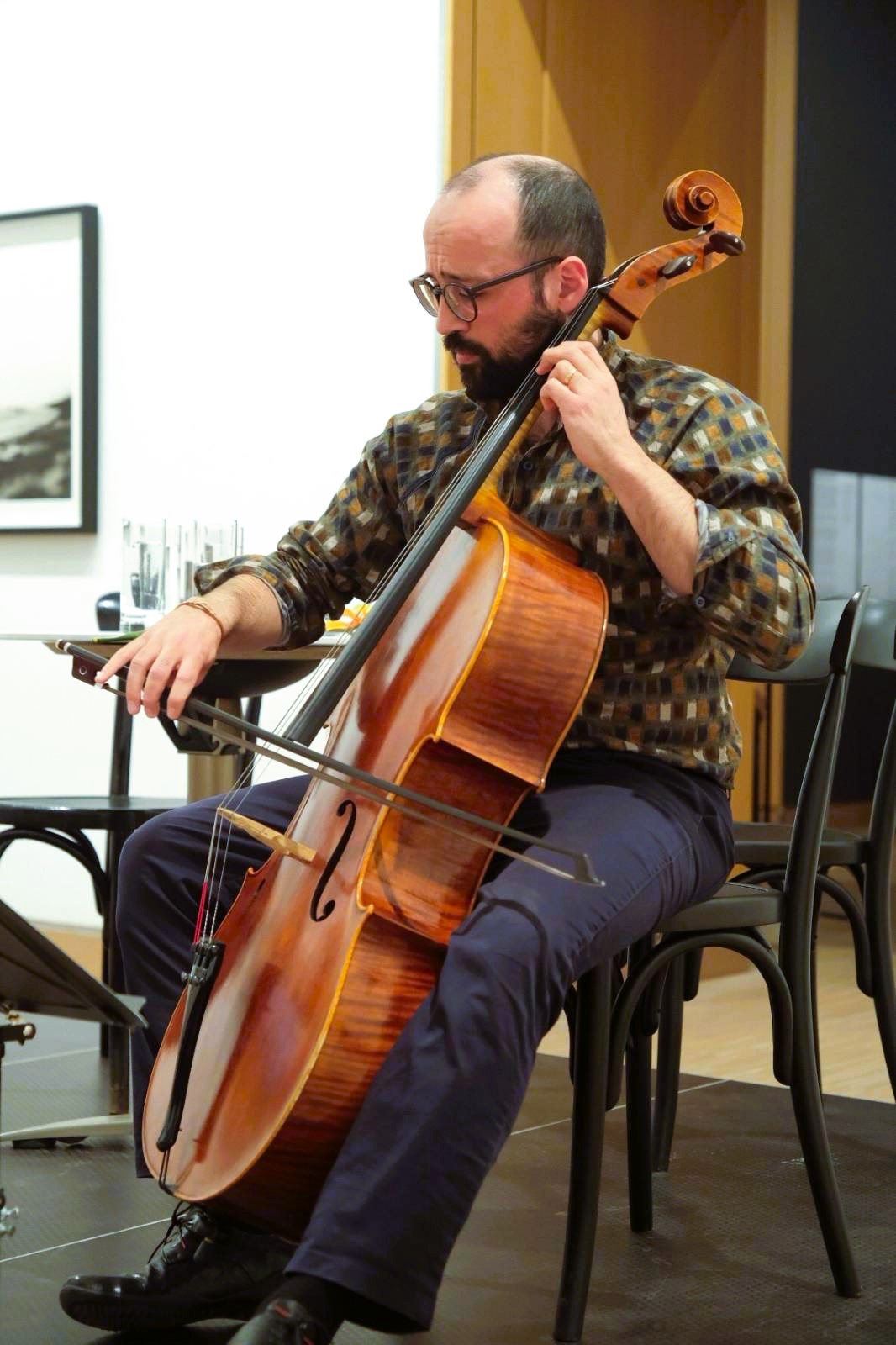
Darüber hinaus wurde „Cant dels ocells“ („Der Gesang der Vögel“) von Pau Casals aufgeführt, ein traditionelles katalanisches Weihnachtslied, das er während seines Exils wiederholt als stilles Symbol für Frieden und Freiheit spielte.
Das Programm wurde zudem durch eine Videobotschaft des Präsidenten der Regierung Kataloniens, Salvador Illa i Roca, bereichert, der sich insbesondere an die katalanische Gemeinschaft in Wien richtete. In seiner Botschaft dankte er den im Ausland lebenden Katalanen und würdigte sie als Botschafter der katalanischen Kultur.
Sant Jordi: Literatur, Liebe und gesellschaftlicher Dialog
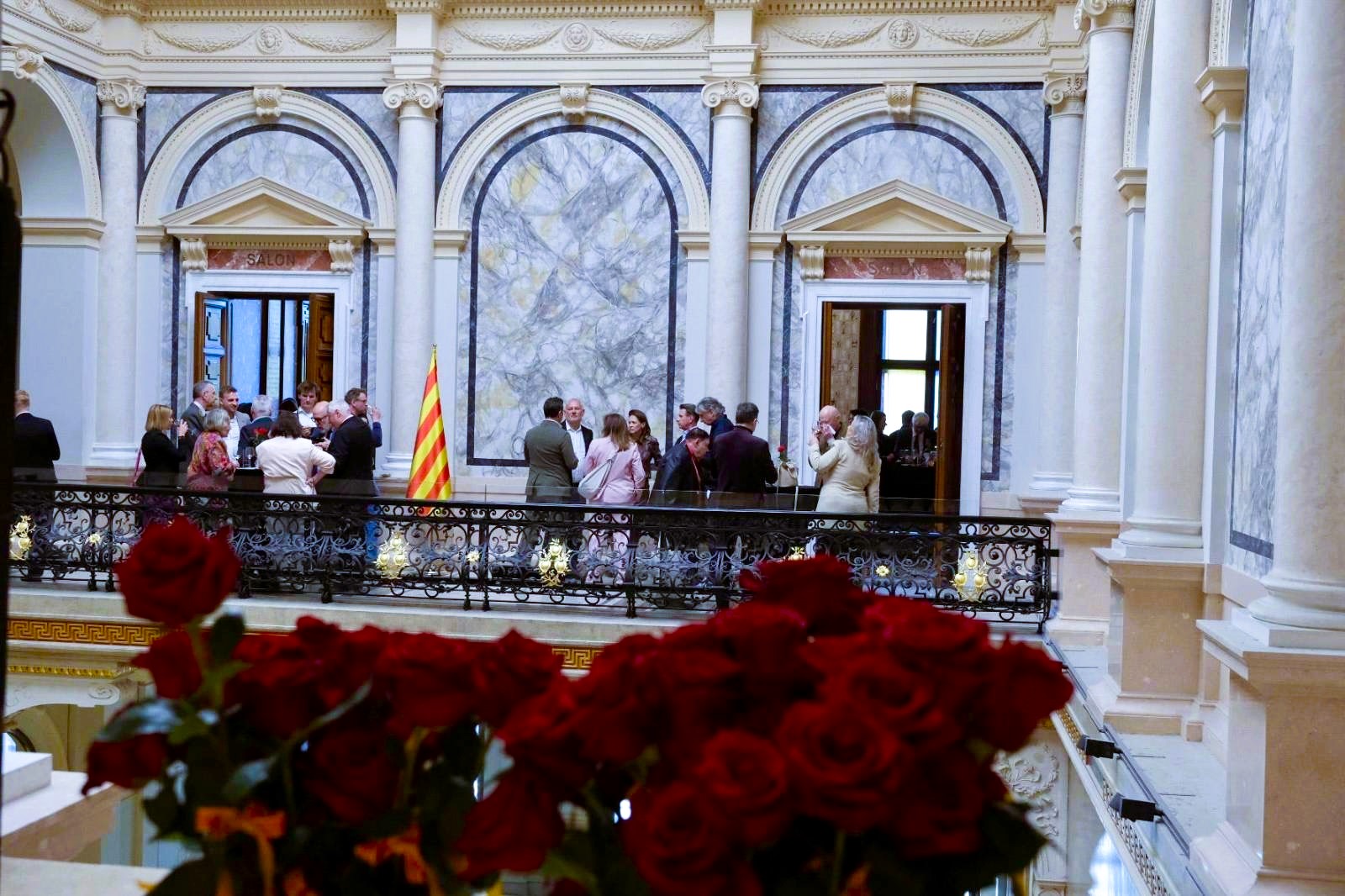
Der 23. April ist einer der wichtigsten Tage der katalanischen Kultur: An Sant Jordi verwandeln sich die Straßen in Orte der Begegnung, an denen Bücher und Rosen als Symbole für Wissen, Liebe und Dialog ausgetauscht werden. Diese lebendige Tradition unterstreicht die zentrale Botschaft der Veranstaltung: Kultur ist ein wesentlicher Bestandteil des gesellschaftlichen Zusammenlebens.
Kunst als Grundrecht: Ein Auftrag für die Zukunft
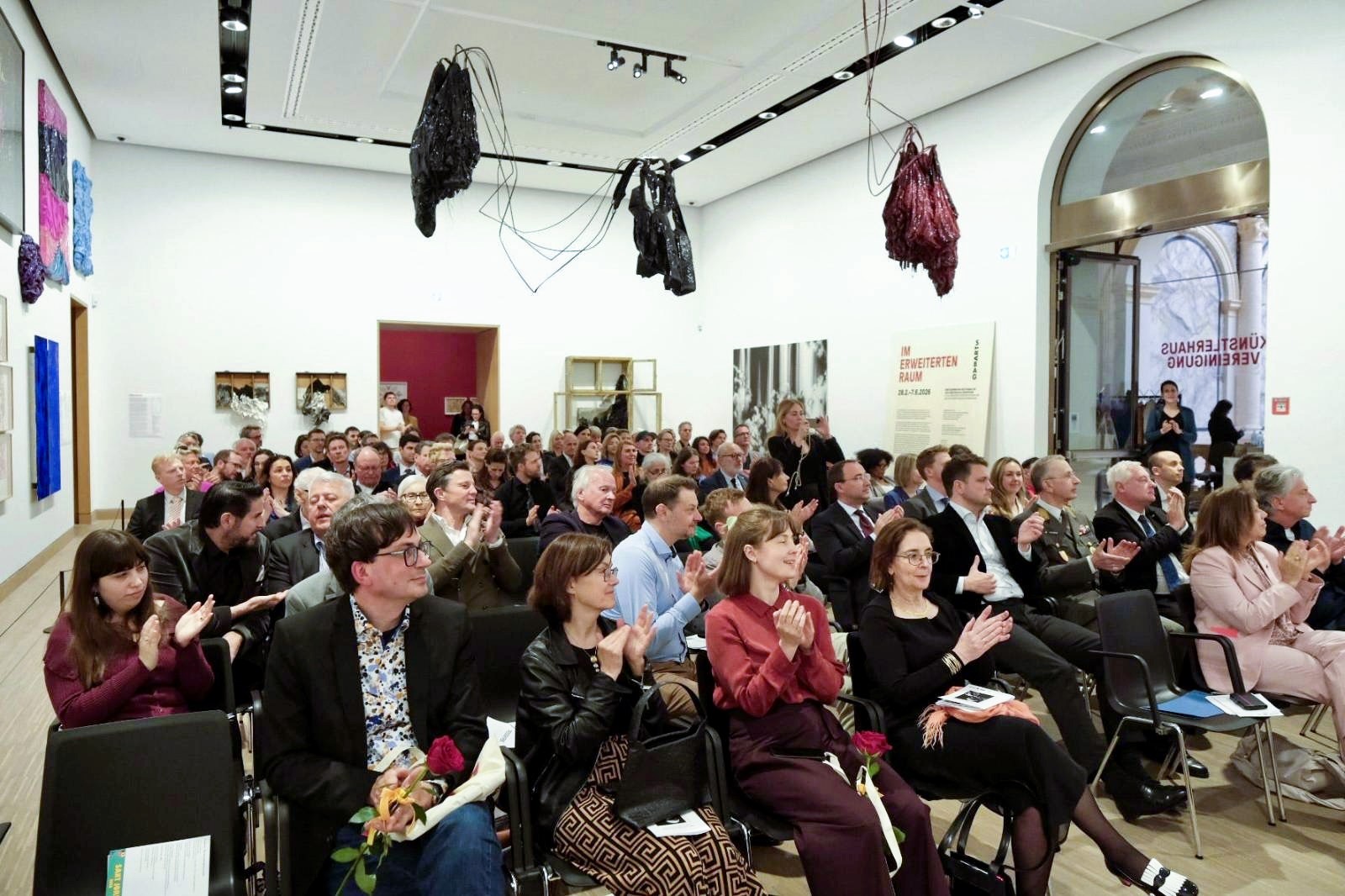
Die mehr als 100 Gäste der Veranstaltung waren sich einig, dass der Zugang zu Kunst und Kultur eine zentrale Voraussetzung für gesellschaftliche Teilhabe und demokratische Entwicklung darstellt. Katalonien engagiert sich seit Jahrzehnten aktiv in Zusammenarbeit mit der UNESCO für den Schutz kultureller Vielfalt und sprachlicher Identität.
English:
Sant Jordi 2026 in Vienna: Art and Culture as a Fundamental Right in Focus
Vienna, 23 April 2026 – On the occasion of the Catalan Saint George’s Day, Sant Jordi, as well as UNESCO World Book Day, the Delegation of the Government of Catalonia to Central Europe hosted a high-level event at the Künstlerhaus in Vienna. Under the title “Art and Culture as a Fundamental Right”, and under the patronage of the Austrian Commission for UNESCO and in cooperation with the Austrian PEN Club, the event focused on the unifying power of art, literature, and cultural diversity in a democratic society.
In this context, the event also commemorated the 150th anniversary of the Catalan cellist and recipient of the United Nations Peace Medal, Pau Casals, whose artistic and political legacy continues to symbolize freedom, human dignity, and democratic values. High-level guests from politics, business, and diplomacy, as well as representatives of civil society and Catalans living abroad, attended the event.
Art as a Voice of Democracy
In her opening remarks, the Delegate of the Government of Catalonia to Central Europe, Krystyna Schreiber, emphasized the unique role of art as a societal force:
“When art, as in the case of Pau Casals, becomes a voice of democracy, its protection is not an option, but a continuous responsibility. UNESCO embodies this mission, and Catalonia has actively supported it for more than 40 years in cooperation with UNESCO, in the service of cultural diversity and the protection of language and identity.”
Emphasis was placed on the central role of art for democracy, and why it must be protected and anchored in law. Especially in times when many people are losing confidence, values are increasingly being questioned, and social tensions are rising, art can act as a mediator: it strengthens cohesion and dialogue, highlights injustices, and provides impulses for innovation.
This perspective also framed the overall narrative of the event: from UNESCO World Book Day to the Catalan exile Pau Casals and the current socio-political situation in Europe. With regard to Pau Casals, it was underlined that art is particularly effective when it takes a stand: his commitment against dictatorships and for human rights made him a global voice for peace far beyond the world of music.
High-Level Programme and International Perspectives
In a keynote speech, Klara Koštal, M.A., Head of the Department “Diversity of Cultural Expressions” at the Austrian Commission for UNESCO, highlighted the importance of cultural diversity as a key international policy issue. In her presentation, she also referred to the UNESCO report Re|Shaping Policies for Creativity (2026).
She particularly emphasized the following fields of action: creating sustainable support structures for at-risk and displaced artists (such as residency programmes as well as legal and psychosocial support), reducing restrictive legal frameworks (such as blasphemy laws or criminal defamation provisions), and ensuring accessible access to specialized legal advice, particularly in dealing with abusive litigation.
This was followed by a discussion between Dr. Marion Wisinger, President of the Austrian PEN Club, and Mag. Günther Oberhollenzer, M.A., Artistic Director of the Künstlerhaus Vienna, on the role of art and culture in contemporary society. The panel, moderated by Mag. Malwina Talik, M.A., was complemented by a lively discussion with the audience.
In addition, “Cant dels ocells” (“The Song of the Birds”) by Pau Casals was performed, a traditional Catalan Christmas song, that he repeatedly played during his exile as a quiet symbol of peace and freedom.
The programme was further enriched by a video message from the President of the Government of Catalonia, Salvador Illa i Roca, who addressed in particular the Catalan community in Vienna. In his message, he thanked Catalans living abroad and recognized them as ambassadors of Catalan culture.
Sant Jordi: Literature, Love and Social Dialogue
23 April is one of the most important days in Catalan culture: on Sant Jordi, the streets are transformed into spaces of encounter, where books and roses are exchanged as symbols of knowledge, love, and dialogue. This vibrant tradition reinforces the central message of the event: culture is an essential part of social coexistence.
Art as a Fundamental Right: A Mandate for the Future
The more than 100 guests attending the event agreed that access to art and culture is a key prerequisite for social participation and democratic development. Catalonia has been actively engaged for decades, in cooperation with UNESCO, in promoting the protection of cultural diversity and linguistic identity.
Text: Svetlana Nenadovic Glusac
Fotos Copyright: Roland Ferrigato