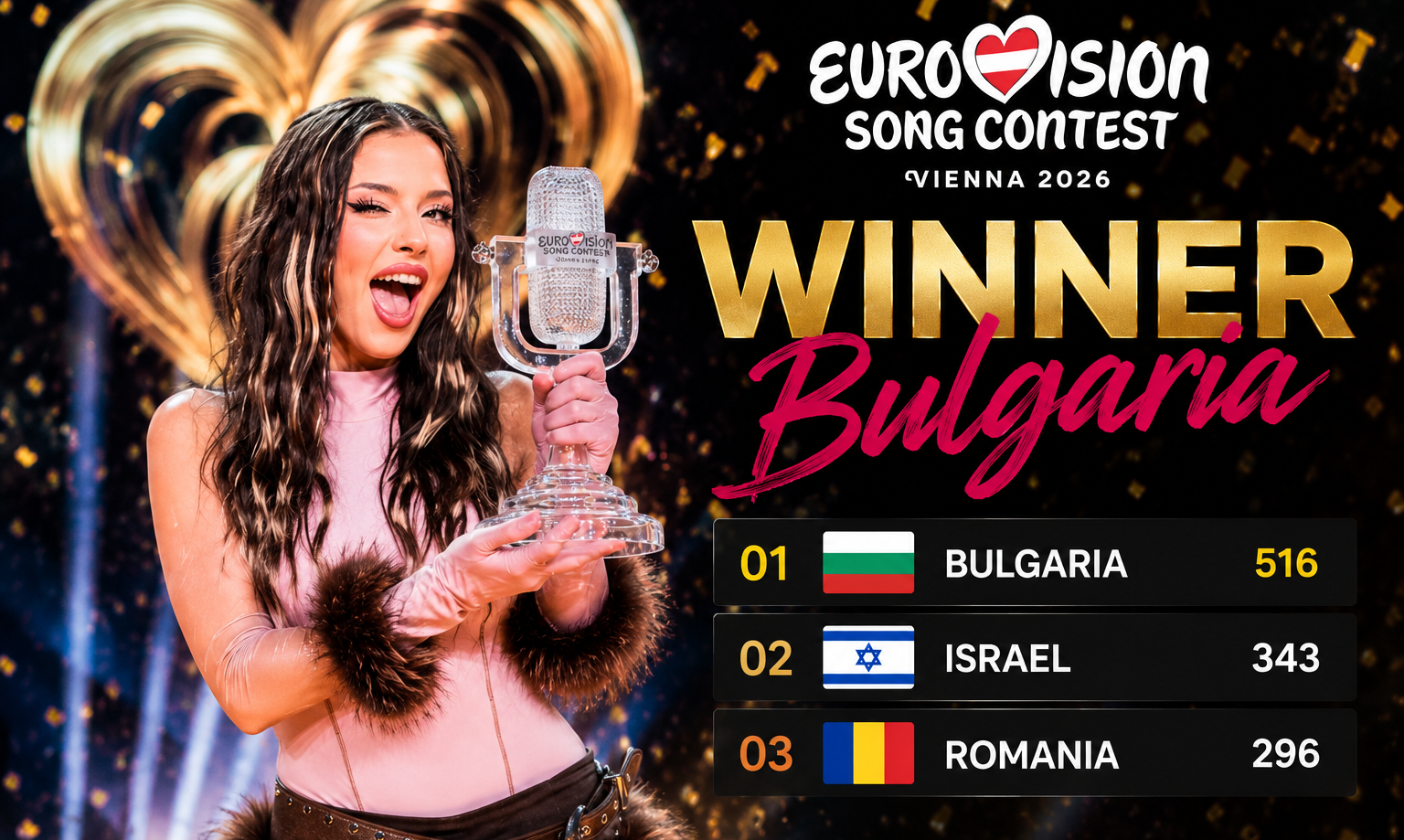
Nach sieben Tagen, in denen Wien ganz im Zeichen des Eurovision Song Contest stand, mit spektakulären Auftritten, zahlreichen Events und zwei spannenden Halbfinalen, ging am Samstagabend das große Finale der 71. Ausgabe des ESC über die Bühne. Der Sieg ging an Bulgarien – dank der charismatischen Sängerin Dara und ihres energiegeladenen Songs „Bangaranga“.
Die bulgarische Vertreterin begeisterte sowohl die internationalen Fachjurys als auch das Publikum in ganz Europa. Von den Jurys erhielt sie starke 205 Punkte, während die Zuschauer ihr beeindruckende 311 Punkte gaben. Mit insgesamt 516 Punkten sicherte sich Bulgarien souverän den ersten Platz.
Lange Zeit sah es jedoch nach einem Sieg für Israel aus. Während der Abstimmung führte das Land zwischenzeitlich deutlich, am Ende musste sich Israel jedoch mit insgesamt 343 Punkten und Platz zwei zufriedengeben.
Sichtlich emotional zeigte sich Dara unmittelbar nach ihrer Krönung zur ESC-Siegerin.
„Ich kann noch gar nicht realisieren, was gerade passiert ist. Ich habe versucht, alles zu geben, und bin unendlich dankbar gegenüber allen Sängerinnen, Tänzern und Produzenten, die diese Show gemeinsam mit mir möglich gemacht haben“, erklärte die Bulgarin nach ihrem Triumph.
Die Bedeutung von „Bangaranga“
Mit ihrem Siegertitel „Bangaranga“ traf Dara offenbar den Nerv Europas. Der Song transportiert eine starke Botschaft über Selbstbefreiung, Individualität und innere Stärke.
Der Titel ist vom jamaikanischen Begriff „Bangarang“ inspiriert, der im Patois Chaos, Rebellion und Aufruhr bedeutet. In Daras Interpretation wird daraus das Symbol einer modernen, selbstbewussten Frau, die ihren eigenen „Chaos-Modus“ akzeptiert und sich nicht gesellschaftlichen Normen unterordnet.
In den Songtexten beschreibt sich die Sängerin selbst als Mischung aus Gegensätzen – „Engel, Dämon, Anführerin und grundlose Psychopathin“. Damit vermittelt sie die Botschaft, dass niemand perfekt sein muss, um akzeptiert zu werden.
Wer ist Dara?
Hinter dem Künstlernamen Dara steckt Darina Nikolajewa Jotowa, die 1998 in Varna geboren wurde. Schon früh entdeckte sie ihre Leidenschaft für Musik und fiel bereits als Kind bei lokalen Wettbewerben und Auftritten durch ihre starke Stimme auf.
Bekannt wurde sie 2015, als sie im Alter von nur 17 Jahren den dritten Platz in der bulgarischen Version von „X Factor“ belegte. Dieser Auftritt markierte den Wendepunkt ihrer Karriere.
Kurz danach unterschrieb sie einen Vertrag beim Label „Virginia Records“ und startete ihre professionelle Laufbahn unter dem Namen Dara. Bereits ihre Debütsingle „K’vo ne chu“ entwickelte sich in Bulgarien zum großen Erfolg und dominierte wochenlang die Charts.
Es folgten zahlreiche erfolgreiche Singles sowie die Alben „Rodena takava“ und „Adhdara“, mit denen sie ihren Status als eine der wichtigsten jungen Popstars Bulgariens festigte.
Neben ihrer Musikkarriere machte sich Dara auch im Fernsehen einen Namen. Sie nahm an der Show „Dein Gesicht klingt bekannt“ teil und arbeitet seit 2021 als Coach und Vocal-Mentorin bei „The Voice of Bulgaria“. Dort führte sie innerhalb von vier Staffeln gleich zweimal ihre Kandidaten zum Sieg.
Privatleben bewusst geschützt
Obwohl Dara zu den bekanntesten und beliebtesten jungen Künstlerinnen Bulgariens zählt, hält sie ihr Privatleben weitgehend aus der Öffentlichkeit heraus. Über Beziehungen oder familiäre Details spricht sie nur selten und konzentriert sich stattdessen auf ihre Musik und kreative Arbeit.
In Interviews betont sie häufig, wie wichtig ihr die Unterstützung ihrer Familie sei. Inspiration finde sie vor allem im Alltag, auf Reisen sowie in Kunst und Tanz. In ihrer Freizeit trainiert sie viel, arbeitet an neuen Songs und teilt über soziale Netzwerke regelmäßig Eindrücke aus dem Studio und von Konzerten.
Mit ihrem ESC-Sieg hat Dara endgültig den Sprung zum europäischen Superstar geschafft – viele Experten sehen in ihr bereits eine der kommenden internationalen Popgrößen.
Israel überzeugte mit emotionalem Auftritt
Auch Israels Vertreter sorgte beim diesjährigen Eurovision Song Contest für große Begeisterung. Sänger und Songwriter Noam Levi trat mit der emotionalen Ballade „Fire Within“ an und galt bereits vor dem Finale als einer der Favoriten des Wettbewerbs.
Der 27-jährige Künstler aus Tel Aviv begann seine Karriere als Straßenmusiker, bevor er durch soziale Medien und mehrere erfolgreiche Singles internationale Aufmerksamkeit erlangte. Besonders bekannt ist Levi für seine gefühlvollen Live-Auftritte und seine markante Stimme.
Mit „Fire Within“ präsentierte Israel eine moderne Pop-Ballade über Hoffnung, Verlust und innere Stärke. Vor allem die intensive Bühneninszenierung und Levis emotionale Performance sorgten europaweit für Begeisterung.
Trotz der knappen Niederlage wurde Israels Beitrag sowohl von Fans als auch von Kritikern als einer der stärksten Momente des Abends gefeiert.
Romania Claims Third Place at Eurovision 2026
Romania finished in third place at the Eurovision Song Contest with a total of 298 points. The country’s representative, Andreea Popescu, impressed audiences with her energetic performance of the song “Heartbeat City,” securing a strong position among the top three finalists.
Der diesjährige Eurovision Song Contest hat erneut gezeigt, wie unterschiedlich die musikalischen Geschmäcker des europäischen Publikums sind, aber auch, wie stark eine überzeugende Performance und echte Emotionen auf der Bühne den Verlauf der Abstimmung bis zum letzten Moment verändern können.
ENGLISH:
EUROVISION SONG CONTEST 2026: Bulgaria Wins – Israel Finishes Second, Romania Takes Third Place!
After seven unforgettable days during which Vienna lived and breathed the Eurovision Song Contest, filled with spectacular performances, glamorous events, and two thrilling semi-finals, the grand final of the 71st Eurovision Song Contest took place on Saturday night. Bulgaria emerged victorious thanks to charismatic singer Dara and her explosive performance of the song “Bangaranga.”
The Bulgarian representative won over both the international juries and millions of viewers across Europe. Dara received an impressive 205 points from the professional juries, while the public awarded her a remarkable 311 points, securing a total of 516 points and a convincing first-place finish.
For much of the voting sequence, however, it appeared that Israel would take the trophy. The country led the scoreboard for several moments during the live voting, but ultimately finished in second place with a total of 343 points.
Clearly overwhelmed by emotion after being announced as the winner, Dara struggled to hide her excitement.
“I still can’t fully process what’s happening. I tried to give everything I had, and I’m endlessly grateful to all the singers, dancers, and producers who helped create this show with me,” the Bulgarian star said moments after her victory.
The Meaning Behind “Bangaranga”
With her winning entry “Bangaranga,” Dara delivered one of the most powerful messages of this year’s competition. The song focuses on self-liberation, individuality, and embracing inner strength.
The title is inspired by the Jamaican word “Bangarang,” a term used in Patois to describe chaos, rebellion, and uprising. In Dara’s interpretation, “Bangaranga” becomes a symbol of a modern, confident woman who embraces her own chaos and refuses to conform to society’s expectations.
Throughout the lyrics, the singer describes herself as a mix of opposites — “an angel, a demon, a leader, and a psychopath for no reason” — sending the message that nobody needs to be perfect in order to be accepted.
Sieh dir diesen Beitrag auf Instagram an
Who Is Dara?
Behind the stage name Dara is Darina Nikolayeva Yotova, born in 1998 in Varna, Bulgaria. She discovered her passion for music at an early age and quickly stood out through local performances and talent competitions thanks to her powerful voice and energetic stage presence.
She first rose to national fame in 2015, when she finished third in the Bulgarian version of “The X Factor” at just 17 years old. That appearance proved to be the turning point in her career.
Shortly afterward, she signed with the label “Virginia Records” and launched her professional music career under the name Dara. Her debut single “K’vo ne chu” quickly became a major hit in Bulgaria and dominated the charts for weeks.
Several successful singles followed, along with the albums “Rodena Takava” and “Adhdara,” which established her as one of Bulgaria’s leading young pop stars.
In addition to music, Dara also became a familiar television personality. She appeared on the Bulgarian version of “Your Face Sounds Familiar” and has worked since 2021 as a coach and vocal mentor on “The Voice of Bulgaria,” where she led contestants to victory twice in four seasons.
Keeping Her Private Life Away From the Spotlight
Despite being one of Bulgaria’s most recognizable and admired young artists, Dara keeps her private life largely away from public attention. She rarely speaks about romantic relationships or family matters, preferring to focus on her music and artistic projects.
In interviews, she often emphasizes the importance of her family’s support and says she finds inspiration in everyday life, travel, dance, and visual art. Outside of performing, she spends much of her time training, working on new music, and sharing behind-the-scenes moments from recording studios and concerts on social media.
With her Eurovision triumph, Dara has firmly established herself as one of Europe’s rising pop sensations, and many industry insiders believe an international career now awaits her.
Israel Impresses With Emotional Performance
Israel’s representative also left a strong impression at this year’s Eurovision Song Contest. Singer-songwriter Noam Levi competed with the emotional ballad “Fire Within” and was considered one of the favorites even before the final began.
The 27-year-old artist from Tel Aviv started his career as a street musician before gaining international attention through social media and a series of successful singles. Levi is especially known for his emotional live performances and distinctive vocal style.
With “Fire Within,” Israel presented a modern pop ballad about hope, loss, and inner resilience. The dramatic staging and Levi’s deeply emotional delivery resonated strongly with audiences across Europe.
Despite narrowly missing out on victory, Israel’s entry was widely praised by both fans and critics, and was regarded as one of the standout performances of the evening.
Sieh dir diesen Beitrag auf Instagram an
Romania Claims Third Place at Eurovision 2026
Romania finished in third place at the Eurovision Song Contest with a total of 298 points. The country’s representative, Andreea Popescu, impressed audiences with her energetic performance of the song “Heartbeat City,” securing a strong position among the top three finalists.
Sieh dir diesen Beitrag auf Instagram an
This year’s Eurovision Song Contest once again demonstrated how diverse the musical tastes of the European audience are, but also how a powerful performance and genuine emotion on stage can dramatically influence the outcome of the voting right up to the very last moment.
Text: Svetlana Nenadovic Glusac
Foto: Eurovision