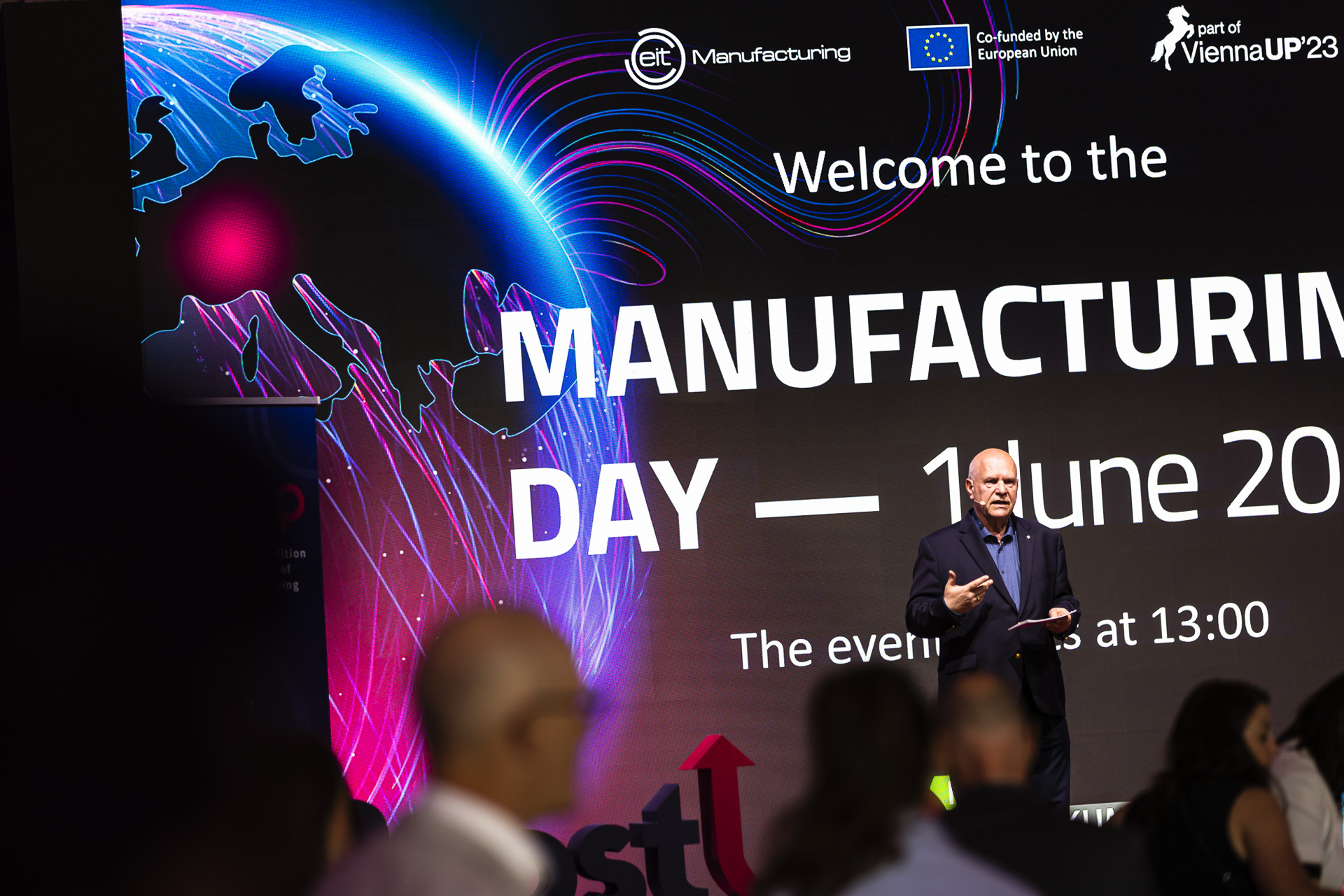
Interview with Johannes Hunschofsky, Managing Director, EIT Manufacturing East
In a previous article, Diplomacy & Commerce highlighted the EIT Manufacturing – Slovakia – X Fund as a promising example of how national and European collaboration can accelerate innovation and industrial transformation. As the programme now concludes, it stands out as a successful pilot initiative, demonstrating how targeted, cross-border cooperation can strengthen ecosystems, support emerging technologies and enhance competitiveness in manufacturing. Against this backdrop, we had the opportunity to speak with Johannes Hunschofsky, Managing Director of EIT Manufacturing East, to reflect on the Fund’s achievements, key success factors and its broader implications for Slovakia and the region.
Diplomacy & Commerce:
Mr. Hunschofsky, what was the EIT Manufacturing – Slovakia – X Fund and what was its core objective?
Johannes Hunschofsky:
The EIT Manufacturing – Slovakia – X Fund was a joint initiative between the Ministry of Investment, Regional Development and Informatization of the Slovak Republic (MIRRI) and EIT Manufacturing East. Its primary goal was to strengthen innovation capacity within Slovakia’s manufacturing sector and to accelerate digital transformation in alignment with the national Smart Specialisation Strategy 2021–2027.
The programme ran from January 2024 to December 2025 and was co-financed by both partners with €185,000 each. Importantly, it was not designed as a single funding instrument. Rather, it was conceived as a structured package of complementary activities addressing startups, SMEs, researchers and policymakers.
Slovakia has a strong industrial base and significant technical expertise. The Fund aimed to complement these strengths by providing structured support mechanisms that accelerate the commercialisation and scaling of innovative manufacturing solutions.
Diplomacy & Commerce:
How did the idea for the EIT Manufacturing – Slovakia – X Fund come about, and what was the process behind setting it up?
Johannes Hunschofsky:
The idea developed quite organically through our ongoing dialogue with the Ministry.
There was a shared understanding that Slovakia has strong industrial capabilities, but that additional, more structured support was needed to accelerate innovation and digital transformation. At the same time, from the perspective of EIT Manufacturing, we were looking to create stronger local impact by connecting national ecosystems more closely with our European network.
The Fund emerged from this alignment. Together with MIRRI, we defined clear priorities: supporting startups, strengthening knowledge transfer and integrating Slovak actors into European value chains, and translated them into a set of complementary programme activities.
What made the process effective was the strong commitment on both sides. From the outset, the ambition was not only to fund innovation, but to build a sustainable ecosystem and long-term partnerships.
Diplomacy & Commerce:
What was so unique about the EIT Manufacturing – Slovakia – X Fund and how did it differ from other funding instruments?
Johannes Hunschofsky:
Its distinguishing feature was its integrated ecosystem approach. The Fund combined financial support with mentoring, access to industrial partners and integration into the broader European innovation network of EIT Manufacturing. In manufacturing, scaling innovation requires collaboration across multiple stakeholders, from research institutions to corporates and investors.
By connecting Slovak companies, research institutions and public stakeholders with European partners, the Fund enhanced both visibility and access to markets. It created an ecosystem in which innovation could progress more effectively from early-stage development to industrial implementation.
Diplomacy & Commerce:
How did this setup look like in practice?
Johannes Hunschofsky:
We structured the Fund around several complementary activities. One key initiative was Industry UP! Slovakia, a national competition highlighting innovative technologies in digital transformation, AI, AR/VR and cybersecurity for manufacturing. The first edition took place during the National Forum of Productivity 2024 where five startups presented their solutions, and the winners, ECTIVE Automation, DAITABLE and OWASmooth, received a two-month tailored growth package including mentoring, training and access to the European innovation ecosystem.
Another important pillar was the Scaling Slovak Innovation programme. Four startups were supported in advancing their technologies from TRL 7 (demonstration stage) to TRL 8–9, meaning market-ready solutions. This included funding, mentoring and integration into European value chains. By the conclusion of the programme, these demonstration projects had progressed significantly toward commercial deployment.
Beyond startup acceleration, the Fund also focused on knowledge transfer and ecosystem development.
Diplomacy & Commerce:
The programme also included international exchange activities. What role did these play?
Johannes Hunschofsky:
International exposure and knowledge transfer were central components. Through the Business Safari 2025, Slovak participants took part in a three-day learning journey in Austria, visiting institutions such as the LIT Factory at Johannes Kepler University and the IFT-TEC Lab at TU Wien. The programme addressed automation, digital manufacturing, innovation management and AI in practice, including a visit to EVVA Sicherheitstechnologie. The objective was to demonstrate how digital transformation can be implemented effectively in real industrial environments. After the programme, we received feedback from participants that was overwhelmingly positive, with many highlighting the practical relevance of the visits and the value of direct exchange with Austrian innovation actors.
In addition, we organised a study visit for Slovak civil servants in June 2024. Representatives from key Slovak institutions engaged with Austrian ministries and innovation actors and visited leading Industry 4.0 facilities, including the TU Vienna Pilot Factory Industry 4.0 and the JKU LIT Factory. This strengthened policy dialogue and supported the refinement of Slovakia’s industrial and innovation policy approach.
Diplomacy & Commerce:
How did you address research and talent development with the Fund?
Johannes Hunschofsky:
The Research Mobility programme supported Slovak master’s and doctoral students by enabling researchers to stay at leading European universities and research institutes.
The focus areas included flexible production systems, circular economy solutions, digital and collaborative manufacturing ecosystems, and human-machine co-working. Participants received financial support and were integrated into European research networks.
This investment in talent is particularly important. Sustainable industrial competitiveness depends not only on technologies, but on people with international experience and advanced skills.
Diplomacy & Commerce:
What overall impact has the EIT Manufacturing – Slovakia – X Fund achieved now that it has concluded?
Johannes Hunschofsky:
The impact is visible at multiple levels. At company level, startups advanced toward market readiness and strengthened their integration into European value chains. At ecosystem level, the programme fostered collaboration between academia, industry and public authorities. At policy level, it facilitated alignment with European best practices in digital and industrial transformation.
Equally important is the broader signal: Slovakia has demonstrated its commitment to advancing industrial transformation through innovation, digitalisation and sustainable production. As one of Europe’s most industrialised economies, particularly in automotive and advanced manufacturing, Slovakia has a significant role to play in strengthening European competitiveness.
Diplomacy & Commerce:
What were the key success factors behind the Fund?
Johannes Hunschofsky:
The close cooperation between MIRRI and EIT Manufacturing East ensured alignment between national priorities and the European innovation framework. Local stakeholders were actively engaged, while the European dimension provided additional expertise, networks and cross-border opportunities. This combination of national commitment and European integration proved highly effective.
Diplomacy & Commerce:
How does this initiative reflect the broader mission of EIT Manufacturing East?
Johannes Hunschofsky:
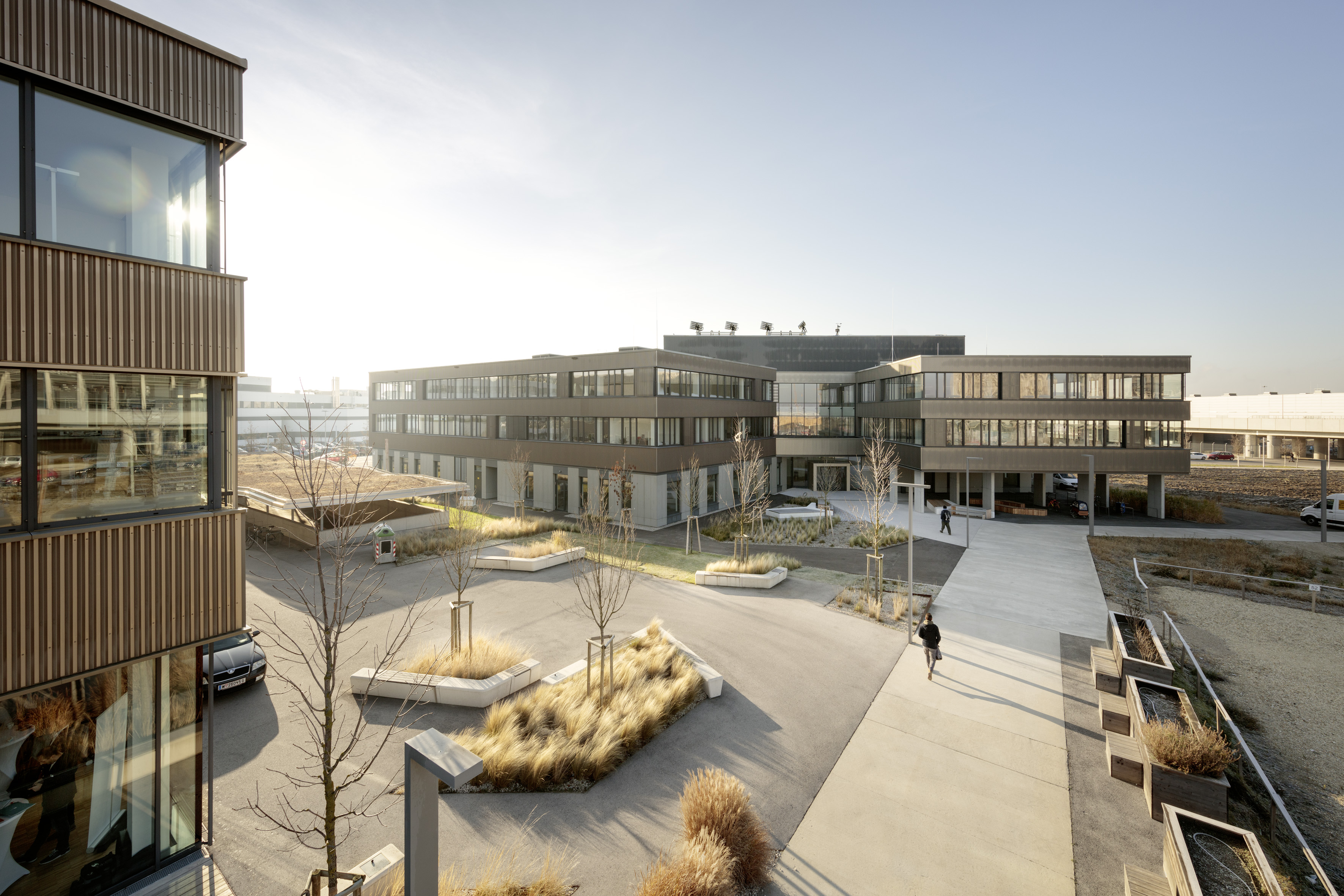
At EIT Manufacturing East, based in Vienna, we serve seven countries in Central and Eastern Europe. Our mission is to strengthen Europe’s global competitiveness through innovation in manufacturing.
The EIT Manufacturing – Slovakia – X Fund translated this mission into concrete action at national level. It demonstrated how structured cooperation between a national ministry and a European innovation community can generate measurable impact, be it startup acceleration, policy learning or talent development.
Although the programme period has concluded, it has laid a solid foundation for continued collaboration and future initiatives aimed at reinforcing Slovakia’s role within Europe’s industrial transformation. EIT Manufacturing will certainly continue to collaborate closely with Slovak partners to broaden access to innovation programmes and strengthen talent development initiatives. At the same time, we see strong potential to develop similar initiatives in other countries across our region, building on the successful model established in Slovakia.
I would also like to take this opportunity to thank our colleagues at MIRRI for their close and constructive cooperation, all participants across the different programme activities for their engagement, and especially the team at EIT Manufacturing East for their tireless work in making the EIT Manufacturing – Slovakia – X Fund a success.
Text: Diplomacy&Commerce Austria/ Svetlana Nenadovic Glusac
Fotos: EIT Manufacturing East /Matthias Heschl/ATP Kurt Kuball